251 W. 72nd St. 2F New York, NY 10023 P:(212) 362-2985 F:(212) 362-2986
Prenatal Yoga Center

Birthing Positions: Don’t Just Take it Lying Down!

I attended Andrea’s birth almost 5 years ago. I think this was the third birth in which I took the role of a doula - I was just a doula in training. Andrea had given birth naturally to her first child (almost 10 pounds if I remember correctly) and was well on her way to repeating the experience.

She was doing remarkably well, positioning her body in ways that felt productive and comfortable (well, as comfortable as one could be while moving through transition). When she reached full dilation and had the spontaneous urge to push, she was positioned on her hands and knees. For her, this seemed like the easiest, most natural way to push her baby out. To my horror, the doctor would not allow her to deliver her baby in this position. The doctor wanted her on her back. Andrea pleaded with the doctor not to make her turn around and get on her back. The doctor wouldn’t budge. So Andrea ended up flipping over onto her back - and pushing her 10 pound baby out in 7 minutes! She tore horribly. To this day, I believe Andrea pushed her baby out so quickly just to spite her doctor.

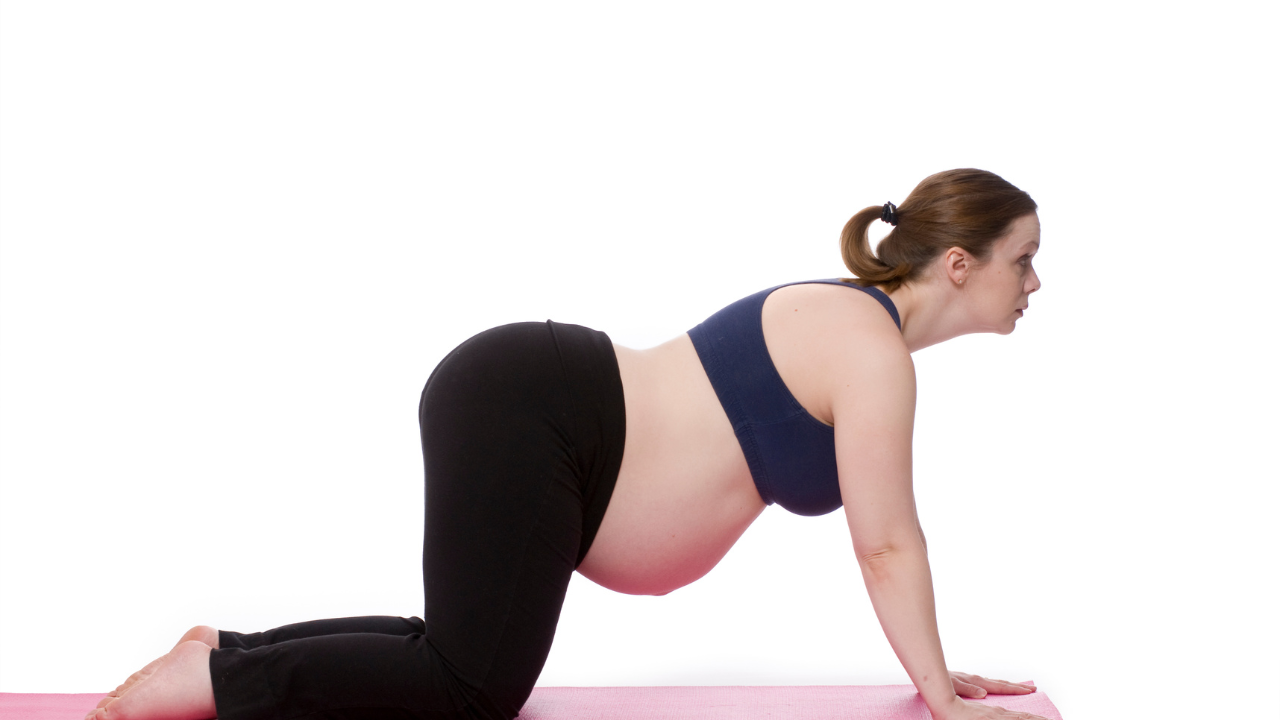
The moral of this story is that there are many positions in which to birth a baby. And research has shown that birthing on the back, although the most common - is NOT the ideal way to facilitate a baby fitting through the pelvis and birth canal. In all fairness, Andrea’s doctor (who was the resident on call, not Andrea’s intended doctor) probably insisted that she birth on her back because she didn’t know how to “catch” a baby in any other position. The supine position is the most convenient for the doctor and is these days the one student doctors are primarily taught. However in my experience, when a woman has been given total freedom to take a birthing position of her choice, she has NEVER chosen to go on her back. The mothers I have seen have chosen to be on all-fours, side-lying, in a partial squat, kneeling, sitting on a birth stool or upright in a seated position.
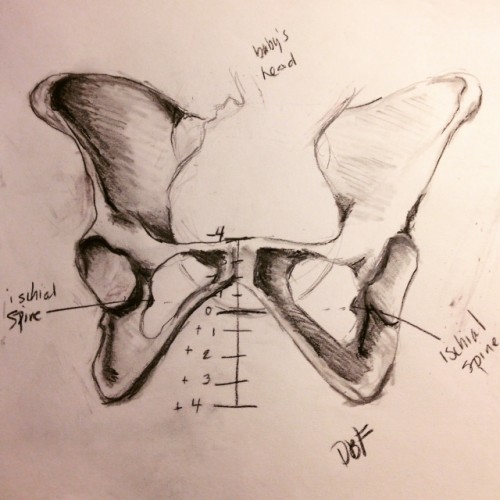
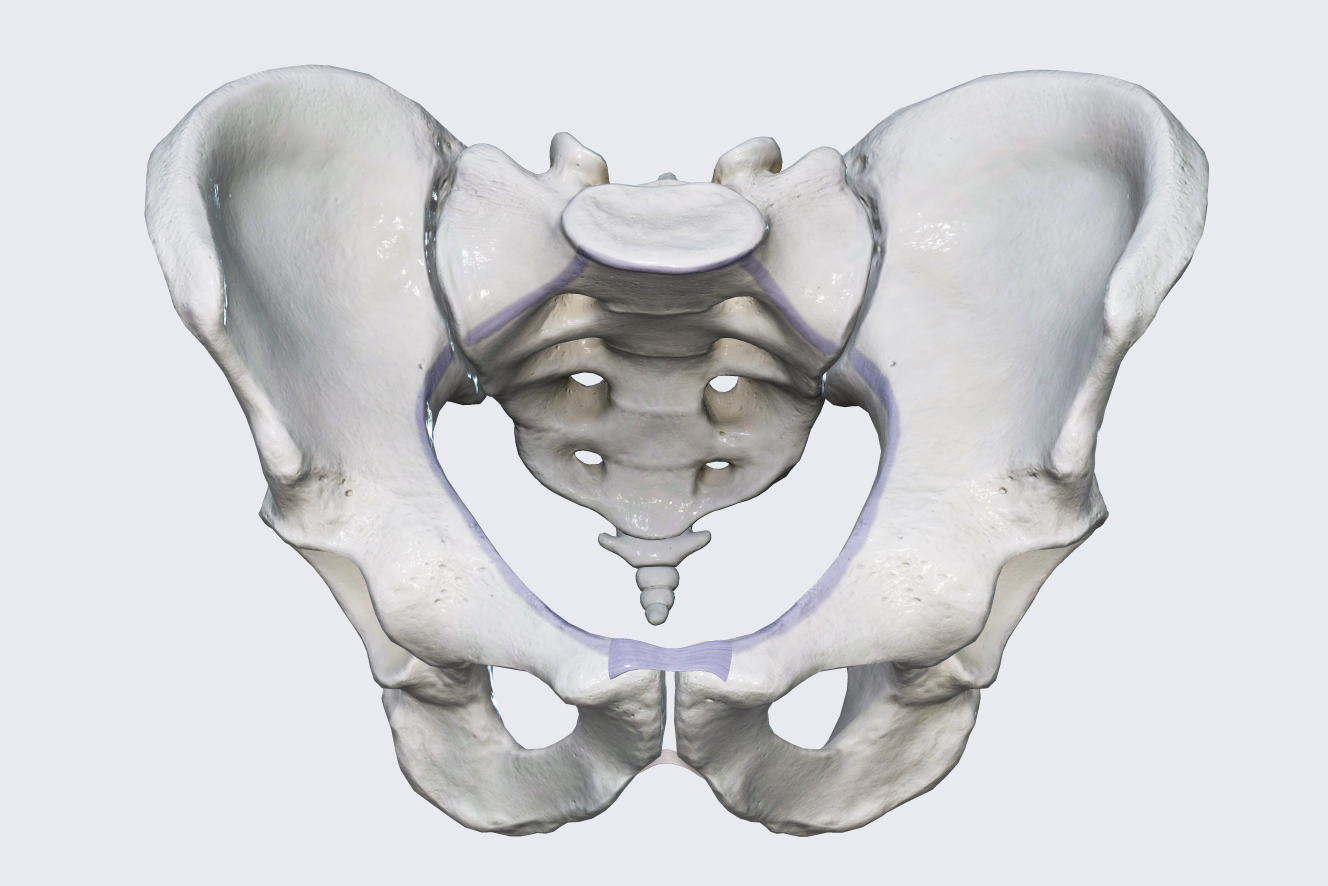
Art from many cultures throughout history shows that women have used both upright and gravity-neutral positions (such as side-lying or hands-and-knees) to give birth to their babies. Until doctors began using forceps in the 17th century, women were rarely shown giving birth in supine positions (lying on the back) The most ideal position for a woman would allow for optimal opening of the pelvic outlet, use the advantage of gravity and offer a smooth path for the baby’s descent through the birth canal. When a mother births in the lithotomy (flat-on-back) or C-position (resting on tailbone with body curled in the shape of a C) she reduces the space in the outlet of her pelvis, making it a tigher fit for the baby. The sacrum gets pushed into the birth canal, thus diminishing the space for baby to move through, and preventing the rectal space from stretching. This will, in effect, lengthen her second stage of labor (pushing). Also, the baby has to work against gravity as it heads upwards over the tailbone and under the pubic bone.

When a woman is on her hands and knees or standing, the Rhombus of Michaelis can be seen clearly because the pressure from the fetal head (which is, in fact, the chin and face as it de-flexes or extends) lifts the sacrum and coccyx out of the way. If a woman is in a well supported squat (** this means with knees apart and the bottom not less than 45cm off the ground, as this allows the back to arch in the correct way **) standing and leaning forwards or kneeling and leaning forwards with her arms clutching onto something higher than her waist, she will instinctively arch her back and ‘throw’ her pelvis out at this stage. Sheila Kitzinger describes in her book ‘The Experience of Childbirth’ how Jamaican peasant women believe that their backs have to ‘open up’ before their babies can be born. This is the same phenomenon. Dr Michel Odent calls it the ‘fetal ejection reflex’.

It is also not uncommon for a woman to hear that her pelvis is too small for the baby to fit through. This is called cephalo-pelvic disproportion (CPD). It does happen - but rarely. It may be that due to the baby’s size a woman needs to take a number of positions in order to push the baby out. Pioneer doula Penny Simkins explains in The Labor Progress Handbook, “Many suspected cases of CPD actually involve fetuses who are subtly malpositioned (asynclitic, deflexed, occiput transverse or posterior), who will fit well through the pelvis once the malposition has been resolved. The shape of the woman’s pelvis is also a consideration. The woman may need to try pushing in a variety of positions to find the ones that optimize descent. Resolving problems of position or fit often requires extra time. Many large fetal heads will mold and fit safely through the pelvis, but molding takes time.” It is important to allow a mother to experiment with different positions to see what is the most effective for her and her baby, especially if her baby is suspected to be large.

I highly recommend having a discussion with your doctor about how he or she feels comfortable “catching” the baby. Also, find out ahead of time if your hospital has squatting bars and birth stools. Each baby, mother and birth is different and requires individual consideration, so why are we all expected to birth in the same way? Phentermine cheap
Best cialis price
Buy generic xanax
Prometrium
Xanax interaction with paxil
Cialis impotence drug eli lilly co
Viagra patent
Phentermine tablets
Free sample herbal viagra
Tramadol online discount cheap
Aminoglutethimide
Cialis and levitra
Xanax 2mg
Iproniazid
Xanax drug information
Cheap xanax no prescription
Perscription phentermine
Herbal phentermine forum
Probenecid
50mg viagra
Phentermine vs adipex p
Caffeine
Phentermine and diet pill
Prescription tramadol
Zolpidem
Oxycontin xanax bars perclesept and lortab
Isoxsuprine
Clarinex
Penicillin
Tolazoline
Buy Adipex
Diphenadione
Buy cheap online viagra
Cimetidine
Mepindolol
Phentermine ionamin
Hydrocodone
Lovastatin
Discount viagra online
Free viagra sample before buying
Line prescription viagra
Phentermine vs phentrazine
Fluconazole
Eulexin
Thiotepa
Accolate
Purchase vicodin
Discount cialis
No prescription phentermine
Benazepril
Phentermine diet pills cheap
Phentermine and topiramate for weightloss
Buy viagra
Cheapest viagra on line
Buy Norco
Phentermine effects
Nevirapine
Ordering phentermine
Phentermine xenical
Discount priced viagra
Shipping overnight phentermine
Lotrimin
Procyclidine
Adipex diet discount phentermine pill
Restoril
Adderall skin allegra skin xanax skin
Fluvastatin
Alternatives to phentermine
Avandamet
Gitalin
Phentermine eprescriptions
Succinylcholine
Tolbutamide
Tussionex
Nitroglycerin
Online pharmacy and phentermine overnight
Phentermine florida
Purchase soma
Viagra for woman
Cialis viagra levitra
Canada viagra
Xanax online without a prescription
Bretylium
Viagra drug interaction
Metolazone
Buying viagra in the uk
Comparison viagra cialis levivia
Disulfiram
How long does xanax stay in your body
Dextroamphetamine
Prempro
Buy cheap vicodin
Xanax depression
Arimidex
Clorazepate
Blue xanax
Cialis com
Mycostatin
Viagra alternative and woman
Lisinopril drug interaction viagra
Phentermine with free shipping
Viagra suppliers in the uk
Nadolol
Fenoterol
Antazoline
Phentermine pharmacy online consultation
Is phentermine safe
Isradipine
Diet pal pay phentermine pill
Cialis erectile dysfunction
Vicodin and pregnancy
Xanax withdrawal symptoms
Hydrocodone info
Hydrocodone prescription online
Buying phentermine online
Soma 350mg
Buy Effexor
Phentermine perscription
Mexico viagra
Cafergot
Tramadol cash on delivery
Viagra sample
Xanax urine test
Generic overnight viagra
Viagra alternative
Blindness cialis
Online pharmacies phentermine xenical meridia
Get online viagra
Trientine
Online consultation phentermine
Nabumetone
Herbal viagra for woman
Concomitant use of cialis and levitra
Cialis levitra viagra compare
Amoxicillin
Cheap phentermine overnight delivery
What is xanax used for
What is xanax
Viagra alternative herbal supplement
Tramadol cause kidney problems
92 accepted cod phentermine
Bulk phentermine
Nitrofurantoin
Pantothenic
Mestranol
Crystal meth and xanax
Half life of xanax
Order phentermine by for saturday delivery
Ambien
Xanax online consultation

July 1st, 2008at 12:21pm Deb

What is a Doula?

Over the last few weeks I have received so many inquiries about doulas. What is a doula? What does a doula do? How much do they cost? How do you interview a doula? So, I thought I would try to answer these questions to the best of my ability.

The word ‘doula’ is derived from Greek and means ‘woman of service’. (In my opinion this sounds a little negative - I prefer ‘labor assistant’!) There are two different types of doulas: labor support and postpartum care. Postpartum doulas are also considered ‘mother’s helpers’. They help mother the mother after her birth, perhaps showing her some newborn procedures, helping establish a schedule for mom and baby, and doing basic chores like cleaning the house, food shopping, and laundry. (I chose to be a labor support doula. I figure I am not that good at cleaning my own house or doing laundry, and to be honest taking a trip to Fairway is a low point in my weekly routine - so my skills are best used to help mom during labor.)

Labor support doulas are usually hired by the couple, although some hospitals provide them free of charge to offer nonjudgmental emotional and physical support. They are also equipped to help answer many questions about the labor and birth process and medical interventions. While most doulas are not trained medical assistants and do not perform medical procedures, they have quite a bit of knowledge that may assist the couple when making decisions about the path of their labor and birth. Personally, I never make a decision for the couple, but rather provide answers to their questions and both pros and cons of any options that are presented. This way, when the couple has to make a decision, they are doing it from a place of knowledge, not fear.

Another reason a doula may be a good person to bring along is that several studies have shown that the presence of a doula can reduce the rate of routine interventions and cesareans. Her assistance tends to result in shorter labors with fewer complications, reduces negative feelings about one’s childbirth experience, reduces the need for pitocin (a labor-inducing drug), forceps or vacuum extraction,and reduces the mother’s request for pain medication and/or epidurals.

There are currently two principle groups that certify doulas: ALACE (Assocation of Labor Assistants and Childbirth Educators) and DONA (Doula Organization of North America). I was certified through DONA. Both groups firmly believe in the importance of consistent, continuous support throughout labor and in respecting the couple no matter how they choose to birth.

I am often asked by concerned mothers who want to have an epidural if that is likely to be ok with a doula. The answer may vary from person to person, but most doulas believe that they are there to assist in the best birth experience a mother can have through her own vision and wishes. I firmly believe that each woman needs to birth how she feels is best for her and her family. The experience of birth has a lasting and profound effect on a woman, and the doula is there to help ensure that it is empowering and satisfying.

Once you have found a doula who you think you would like to work with, what is the next step? I would suggest a ‘meet and greet’. This is an opportunity for the mother and her partner to sit and chat with the doula and inquire about her style, beliefs, price, availability, back-up support, etc.

Here are a few questions that may be useful:

1. What is your philosophy on childbirth? Do you only attend and support women that are intending to do a natural birth? Are you open to the use of pain medication?

2. What are some of the non-pharmaceuticals pain methods that you use?

3. How do we determine when you join us? Do you come to our house at the beginning of labor? Or do you meet us at the hospital or birthing center?

4. Have you worked with my doctor, practice, midwife or at the birthing center or hospital where I will be giving birth?

5. How many births have you attended?

6. What kind of training do you have?

7. Do you have a back-up doula in case you are not available when we need you?

8. What is your cost?

9. Do you have references we can check?

10. How many times before the labor do we meet? Do you help us with our birth plan?

One of the most common questions I encounter is the cost of doulas. There is a range based on several factors - where you live, for instance. A doula in NYC will probably cost more than outside the metro area. Experience is another determining factor. At this time the average range for a doula with a fair amount of experience, which I would say is at least 25 births under her belt, is $1500-$2500. I have heard of very seasoned doulas who have attended hundreds of births charging upwards of $4000. If these numbers sound outrageous, you could also consider finding a doula who is in training and would probably only ask you to cover her expenses - taxi fare and food. Some doulas even work on a sliding scale. But keep in mind when digesting this figure that the doula is making a commitment to you to be on call and available for three weeks prior to your due date up until you have your baby. It is possible that your doula will be on call for you for a whole month!

I hope this helps explain the role of the doula and the benefits of having one as a member of your support team, and that you now have some insight as to how to find the doula who is right for you. More news by category Topic -: Buy phentermine saturday delivery ohio Tramadol hydrochloride tablets Picture of xanax pills Free shipping cheap phentermine Buying phentermine without prescription Safety of phentermine Pyridium Generic viagra cialis Cialis generic india Pink oval pill 17 xanax identification Buy free phentermine shipping Best price for generic viagra Information about street drugs or xanax bars Ordering viagra Snorting phentermine Hydrocodone overdose Lithium Amiodarone Get online viagra Order viagra prescription Order xanax paying cod Cheap phentermine free shipping Imiquimod Tramadol next day Linkdomain buy online viagra info domain buy onlin Pfizer viagra sperm Vidarabine Cheapest viagra price Prevacid Viagra cialis levitra comparison Dutasteride Lisinopril Thiotepa Female spray viagra Black market phentermine Betamethasone Cialis forums What does xanax look like Loss phentermine story success weight Order xanax overnight Viagra alternative uk Diet online phentermine pill Order xanax cod Mecamylamine Eulexin Cheap hydrocodone Buy cheapest viagra Viagra xenical Phentermine with no prior prescription Xanax in urine Macrodantin Cheap phentermine with online consultation Epivir Buy phentermine epharmacist Ditropan Woman use viagra Cialis erectile dysfunction Xanax withdrawl message boards Viagra online store Atorvastatin Generic ambien Is phentermine addictive Next day delivery on phentermine Buy online viagra Ethanol Natural phentermine Avandamet Xanax long term use Diet page phentermine pill yellow 5 cheap Cheapest secure delivery cialis uk Information medical phentermine Cialis experience Phentermine no perscription Compare ionamin phentermine Viagra cialis levivia dose comparison Noroxin Effects of viagra on women Buy cheap cialis Viagra shelf life Hydroxyurea Phentermine discount no prescription Buy cheap online viagra Dog xanax Online cialis Viagra class action Viagra price Phentermine without prescription and energy pill Hydrocodone cod only Nicoumalone Cheapest viagra Cheap ambien Vicodin without prescription Phentermine prescription online Phentermine snorting Mirtazapine Quazepam Isradipine Buy generic viagra online Xanax look alike Moxifloxacin Viagra experiences Piroxicam Nicorette Free try viagra Sotalol Cash on delivery shipping of phentermine How do i stop taking phentermine Xanax prescriptions Cheapest phentermine 90 day order Niacinamide Phentermine weight loss Phentermine Xanax grapefruit
Discount viagra
Long term effects of xanax
Cialis levitra better
Tramadol pharmacy
Phentermine discount no prescription
Lamivudine
Hexoprenaline
Viagra lowest prices
Neomycin
Buy Phentermine
Buy phentermine online with pay pal
Atacand
Dexbrompheniramine
Non perscription generic cialis
Buy herbal viagra
Prescription for viagra
Loprox
Senna
Lowest price viagra
Leflunomide
Canada xanax
Ativan
Phendimetrazine
Vicodin withdrawal
Coumadin
Heroin
Diamox
Adipex p phentermine vs
Cialis dysfunction erectile levivia viagra
Online phentermine order
Thiabendazole
No overnight prescription xanax
Viagra faq
Viagra for women
Cialis info
Picture viagra pill
Order viagra buying viagra uk
Nitric oxide viagra
Disopyramide
Percocet
Androgel
Alendronate
Phentermine hcl 37.5 mg
Mebanazine
Cheap price on phentermine
Cheap phentermine free shipping
Phentermine pill
Androgel
Cialis commercial
Phentermine phendimetrazine
Phentermine versus meridia
Permax
Albuterol
Injecting xanax
Sulindac
Buy online order viagra
Phentermine 37.5
Cheapest phentermine diet pills
Purchase cialis
Mevacor
Phenytoin
Estrace
Berman sister female viagra study
Brand drug generic name viagra
Buy viagra online get prescription
Ethopropazine
Cialis online
Adipex diet phentermine pill prescription
Tramadol long term use
Nicardipine
Advair
Drug viagra
Buy Ativan
Pay pal phentermine
Cheap phentermine no prescription
Phentermine prescriptions online
Generic meridia
Phentermine reviews
Phentermine and topiramate for weightloss
Ethoheptazine
Buy cheap domain onlinemiheyorg phentermine phentermine
Picture of xanax
Digitoxin
Fluticasone
Xanax dose
Discount phentermine free shipping
Pioglitazone
$50.00 phentermine
Canada cheap viagra
Miconazole
Generic overnight viagra
Cipro
Phentermine forums and chats
Compare phentermine prices
Hydrocodone withdrawal
Humulin
Fluconazole
Cortisone
Anxiety disorder xanax xr to wean off effexor xr
Altace
Generic xanax 2mg
Phentermine weight loss medication
Nadolol
Xenical hgh phentermine quit smoking
Oxymetazoline
Viagra cialis levivia comparison dosages
Viagra anxiety
Fioricet
Phentermine next day delivery
Dangers of phentermine heart
Information medical phentermine
Side effects of phentermine
Phentermine online diet pill
Phentermine
Chlortetracycline
Buying viagra online
Physical symptoms of high blood pressure and xanax
Synthroid
Succinylcholine
Lisinopril with viagra
Soft tab viagra
Uk cheapest viagra
Plendil
Viagra erection
Ribavirin
Cefatrizine
Losartan
Fast acting viagra
Alprazolam xanax over night
Methyldopa
Imodium
Flomax
Mivial valve prolapse viagra
Fioricet with codeine
Imitrex
Ambien withdrawal
How to use viagra
Adipex cheap phentermine
Buy phentermine online without prescription
Add link phentermine purchase suggest
Buy phentermine at amide pharmaceutical
Dulcolax
Furazolidone
Botox
Phentermine 37.5 mg free shipping
Moexipril
Otc viagra
Dalteparin
Online pharmacy xanax

June 27th, 2008at 11:54am Deb

Home Birth: Is This the Next ‘Right to Choose’?!

On June 18th the American Medical Association (AMA) issued a resolution in support of the ACOG statement that “the safest setting for labor, delivery, and the immediate post-partum period is in the hospital, or a birthing center within a hospital complex, that meets standards jointly outlined by the American Academy of Pediatrics (AAP) and ACOG, or in a freestanding birthing center that meets the standards of the Accreditation Association for Ambulatory Health Care, The Joint Commission, or the American Association of Birth Centers.” as well as a resolution “to develop model legislation in support of the concept…“.

The statement from ACOG and the subsequent resolutions from the AMA are very likely due at least in part to the increased attention from the media on home birth, brought to the forefront by the film “The Business of Being Born” and its producer Ricki Lake. I have seen the film multiple times and think it is a very responsible, well-done documentary on the subject of home birth. The overall message is that home birth is a safe option for a low-risk woman who has a trained, certified midwife in attendance for medical assistance.

The midwifery model of care is based on the concept that pregnancy and birth are normal life processes - not pathological medical conditions. However midwives are trained medical experts. They monitor the mother and the baby throughout labor with a dopplerscope, come equipped with oxygen and resuscitation skills, and bring Pitocin in the event that it is necessary. They are also at the ready to make a call to transport the woman to a medical facility should she need more advanced medical attention. But unlike many medical professionals within hospital walls, they allow the birthing mother a great deal more choice - for instance the position she wishes to take to birth her baby - with fewer restrictions.

There have been numerous studies demonstrating that a home birth with a trained midwife can be a good choice for low-risk women who want to avoid unnecessary routine interventions. The largest and most rigorous study of home birth internationally to date found that among 5,000 healthy, “low-risk” women, babies were born just as safely at home under a midwife’s care as in the hospital. And not only that, the study, like many before it, found that the women actually fared better at home, with far fewer interventions like labor induction, cesarean section, and episiotomy (taking scissors to the vagina, a practice that according to the research should be obsolete but is still performed on one-third of women who give birth vaginally).

Other eye-opening statistics indicate that though the US has the most expensive births, the maternal and infant mortality rates are on the rise. According to Mother Magazine, US infant mortality rates continue to rank it below 30 other countries. Twenty-two percent of all pregnancies are induced, and most worrisome of all, in the last four years the maternal mortality rate has risen above 10 per 100,000 for the first time since 1977. These statistics can not be blamed on home birth since only 1% of US women are birthing in their homes.

If you look outside the US, many other countries are strong proponents of allowing women the choice to birth at home. The Netherlands with over a third of all births being planned homebirths. The Perinatal Study Group came to this conclusion about the Dutch system of maternity care: “This is an important exception: this country also has one of the lowest mortality rates in the world for both mother and baby. This maternity system is worthy of close evaluation and emulation.” Across the pond, the British OB/GYNS respond with “There is no reason why home birth should not be offered to women at low risk of complications… it may confer considerable benefits for them and their families. There is ample evidence showing that laboring at home increases a woman’s likelihood of a birth that is both satisfying and safe…”

Home birth is not a choice for everyone. Several states in the US have made a home birth attended by a direct-entry midwife illegal. These states include Alabama, North Carolina, Georgia, Hawaii, Illinois, Indiana, Iowa, Kentucky, Maryland, Missouri, South Dakota and Wyoming. One of the concerns of home birth advocates is that the AMA is trying to persuade individual state legislators to see home birth as harmful to the baby, equating it as child abuse, for which the woman may be criminally prosecuted.

How a woman chooses to birth should be based on her needs and what feels right for her and her family. She should be educated about her options and empowered by her choices. Wherever a woman is most comfortable, supported and heard is the best place for her to birth her baby, whether that be at home, a birthing center or a hospital. Throughout history women have fought long and hard for the right to make decisions about their own bodies. Birthing is a natural ability with which women come naturally equipped. Shouldn’t we be able to choose how and where?Phentermine diet medication
Canadian viagra
Mail order viagra
Viagra dosages
Alfentanil
Phentermine free online consultation
Phentermine order
Vitamin b12 1000 mcg phentermine and panic attacks
Hydrocodone guaifenesin
50mg generic viagra
Phentermine diet
Prozac and phentermine
Atorvastatin
Phentermine pill town
Inderal
Use of viagra
Viagra xenical
Long term effects of phentermine use
Losartan
Dilantin
Viagra info
Liquid cialis
Purchase cialis online
Soma online pharmacy
Where to buy phentermine online
Indocin
Buy Fioricet
Imuran
Dangers of taking phentermine
Phentermine drug interactions
Triazolam
Viagra price
Phentermine resident sale virginia
Phentermine 30 mg
Viagra alternative and woman
Fosinopril
Viagra sale online
Novobiocin
Natural viagra type alternatives
Try viagra for free
Phentermine pharmacies online
Ouabain
Mexico viagra
Anxiety disorder xanax xr to wean off effexor xr
Pravastatin
Phentermine 37.5
Spironolactone
Plaquenil
Topamax
Alendronate
Phentermine interactions
Phentermine a159
Clomid
Diet pills phentermine
Norflex
Ecstasy
Dirithromycin
Isoproterenol
Diet information phentermine pill
Skelaxin
Meridia weight loss
Low natural resources for the drug phentermine
Buy Adipex
Oxymorphone
Fluorescein
100 phentermine
Discount phentermine free shipping
Cheap overnight tramadol
Brand drug generic name viagra
Xanax prescription online
Imitrex
Soma cube
Adipex
Alternative to phentermine
Xanax american express
Order phentermine by cod
Viagra side affects
Losec
Oxacillin
Order generic viagra
Mobic
Phentermine
Xanax and depression
Viagra sale
Norflex
Paregoric
Overnight xanax or alprazolam delivery
Hydrochlorothiazide
Xanax withdrawals
Zetia
Nelfinavir
Benzthiazide
Dimenhydrinate
Phentermine wholesale
Crestor
Capreomycin
Dibenzepin
Viagra soft tabs
Isopropamide
Phentermine versus meridia
Prescription phentermine with cod payment
Adipex meridia phentermine xenical
Pravachol
Xanax without a perscription
Buy phentermine online
Erection viagra
Phentermine 37 5
Drug information on xanax
Tramadol effects
Alprazolam
Diphenhydramine
Buy com lvivhost online viagra
Alternative new viagra
Clomocycline
Buy viagra in uk
No perscription generic viagra
Viagra commercials
Viagra erection
Buy generic hydrocodone
Cetirizine
Phentermine feedback
Phentermine to buy
Cyclacillin
Heparin
Phentermine withdrawal symptoms
Viagra cialis levivia comparison
Buy locally viagra
Order viagra now
Diprolene
Efavirenz
Phentermine 90 day
Phentermine mastercard
Narcotic tramadol
Phenolphthalein
Cogentin
Cyber pharmacy viagra
Soma gallery
Phentermine eprescriptions
Addicted to xanax
Imipramine
Book buy online order viagra
Time released phentermine
Add link phentermine purchase suggest
Lamictal
Triflupromazine
Phentermine no rx
Deferoxamine
Propranolol
Macrodantin
Frontier pharmacy phentermine

June 20th, 2008at 10:53am Deb

Celebrity Births. The Good. The Bad. The Influence.

I have never been one to closely follow celebrity gossip. In fact, I am embarrassingly behind the times - stuck somewhere in the late 90’s when Julia Roberts, Meg Ryan and Friends were big. But I can’t deny the influence celebrities have on society. They are the American equivalent of the British Royal Family. Recently, the biggest Hollywood trend is pregnancy and babies. (I have even been called up by VH1 looking for the scoop on “hot Hollywood mamas” only to disappoint the producer when I told him the mega stars have not passed our threshold.)

With this uprise in celebrity births there is a bit more scrutiny on how the precious little off-spring of the Hollywood elite come into the world. And, it stands to reason that like everything else, how Tinseltown gives birth will have an impact on Jane Q. Public. There seem to be two emerging camps of thought: A return to the home for birth or an early trip to the ER for a planned cesarean birth.

On one hand we have people like Ricki Lake, who has used her celebrity status to open the eyes of many to the possibility and safety of a home birth with her film The Business of Being Born. I recently spoke with one midwife who said she has never been this busy. That movie really boosted business! After a little digging, I was thrilled to find out that many well-known celebs have recently opted for a home birth with a midwife. Demi Moore, Cindy Crawford, and Davina McCall have all given birth at home three times. Nelly Furtado, Lucy Lawless, Ani DiFranco, and Pamela Anderson are also amongst those who chose a home birth. Pamela Anderson is quoted as saying “I gave birth at home both times, naturally, with a midwife, in water, with nothing.’

Then there is the other side - the planned cesarean births - that seem to get a bit more media attention. I guess what I find most horrifying is the reasoning behind this choice, and I am ghastly afraid that the American public will follow suit. Many of the Hollywood mamas are “too posh to push”. Christina Aguilera has been quoted in Hello Magazine as saying “I didn’t want any surprises. Honestly, I didn’t want any [vaginal] tearing. I had heard horror stories of women going in and having to have an emergency C-section [anyway]. The hardest part was deciding on his birthday. I wanted to leave it up to fate, but at the same time I was ready to be done early!” I strongly encourage readers to research the full spectrum of evidence on the risks of non-emergency C-sections.

A related scary trend is the idea of “near term” births. These are babies that are delivered 4 or 5 weeks before the given due date. (Note that full term is considered between 37-42 weeks.) It’s rumored that some celebrity moms have asked to deliver their babies via C-section a month before their due dates to get a head-start on slimming down, says Wang, co-director of the newborn nursery at Massachusetts General Hospital.

There is significant risk to a child delivered before full gestation. A study published last year in the medical journal Pediatrics,compared 90 near-term infants with 95 full-term infants. Near-term babies were more likely to be evaluated for infections and to have low blood sugar, unstable temperatures, breathing problems and jaundice. As a result, 27% of the near-term babies required treatment with intravenous fluids, while only 5% of the full-term babies did. And 50 of the near-term infants didn’t get to leave the hospital with their mothers, compared with only 7 of the full-term babies. Infant mortality in our country is at a surprisingly high rate for a developed country. Does this “near term” birthing trend shed some light on why U.S infants die too often? Marian MacDorman, a statistician at the U.S. National Center for Health Statistics (NCHS), was recently quoted as saying The single most important thing we can do to lower the rate of infant mortality is to reduce the rate of preterm birth. But in fact the trend is going in the opposite direction — that rate [in the U.S.] is increasing.

We live in a society where our heroes are actors and rock stars - fame is valued, many would argue, more highly than education. I’m not prepared to debunk the importance of the cool factor in our role models. But I do think it’s important to bear in mind that when it comes to life and death decisions, jumping on any bandwagon being driven by pop culture is ill-advised. Who will empower you? What will inspire you? And what is informing your decisions?

Watch the red carpet for the latest in evening gown fashion and read the tabloids to see who looks best in a bikini. But when it comes to how you bring life into the world, look not to the A-list, but to your very own inner goddess.

*Check out the article from iyogalife.com about Angela Kinsey from The Office, as she talks about how prenatal yoga practice prepared her for birth!

Buy premarin
Contradiction esomeprazole magnesium nexium
Dicyclomine 20mg
Generic demerol
Aspirin pregnancy
Meloxicam for dog
Avodart cialis clomid diflucan dostinex gluco
Nitroglycerin pill
Crestor drug
Generic prilosec
Man nolvadex
Bush glycerine lyric
Macrobid use
Mirena problem
Bumetanide
Keflex antibiotic
Oxcarbazepine trileptal
Drug keppra
Levothyroxine mylan
Interferon alfa
Premarin vaginal cream
Dexamethasone and pregnancy
Bentyl dicyclomine effects side
Toprol medicine
Bleomycin
Picture of penicillin
Making glycerine soap
Indapamide
Macrobid medicine
Flonase use
Order phentermine online
Arava lawyer pennsylvania
Cefpodoxime proxetil
Chlorzoxazone 500mg
Epirubicin
Lotrimin powder
Valerian root
Aspirin buffered
Ammonium Chloride
Medicine relafen
Norvasc 5mg
Hydrochlorothiazide tablet
Propranolol hcl
Dianabol steroid
How to make pseudoephedrine
Cheap nicorette
Percocet 512
Potassium iodide formula
Allegra side effects
Cream verapamil
Dopamine schizophrenia
Premphase
Lamictal and anxiety
Loratadine 10 mg
Cheap zithromax
Diovan hct
Metoclopram reglan
Guanadrel
Isosorbide mononitrate
Drug neurontin
Nizoral a d
Flagyl use
Norgestimate and ethinyl estradiol
Avodart
Glucophage
Hydriodic Acid
Chromium dinicotinate glycinate
Lanoxin drug
Actonel 35mg
Cheap aldara
Pass drug test niacin
Alendronate sodium tablet
Digitalis toxicity
Hc ibuprofen
2 miconazole nitrate
Side effects biaxin clarithromycin
Atarax hydroxyzine side effects
Celexa pregnancy
Methdilazine
Opium perfume
Oxymetazoline
Darvocet information
Adhd imipramine
Breast cancer femara metastatic zometa
Normal digoxin level
Nirvana lithium
Abilify effects medication side
Effe haldol side
Bella renova
Elidel
Avanti lipids
Actos side effects
Lodine 500mg
Oxycontin side effects
Pravastatin sodium
Exelon power
Decadron
Coumarin
Buy bontril
Acetaminophen cod 3
Meperidine demerol
Red passion flower
Synthroid side affect
Pyrazinamide
Loperamide dosage
Cephradine
Aldara cancer skin
Sodium saccharin
Diclofenac sod 75mg
Lovenox shot
Nabumetone relafen side effects
Increase dopamine
Polymyxin b sulfate and trimethoprim ophthalmic
Cheap prilosec otc
Braidwood exelon
Metoclopramide reglan
Cheap ultracet
Eli lawsuit lilly olanzapine
Lasix surgery
Hydroxychloroquine
Information prednisone
Minoxidil
Guaifenesin pregnancy
Flagyl and pregnancy
Hydrochlorothiazide dosage
Interferon treatment
Adenosine thallium
Meningitis vaccine
Flomax for woman
Effects ezetimibe side vytorin
Chlorhexidine solution
Bentyl dicyclomine medication
Toprol xl 25 mg
Prilosec otc coupon
Reglan medicine
Indomethacin capsule
Gemfibrozil lopid
Prevacid infant
Zyprexa olanzapine
Buy fenfluramine
Oxcarbazepine trileptal
500mg clarithromycin drug
Sotalol
Chloroquine malaria
Sotalol hcl
Furazolidone
Adipex pill
Accupril side effects
Lamisil 250 mg
Dilantin toxicity

1 comment May 27th, 2008at 06:05am Deb

My Labor Has Started. Now What?

Very few occasions in life have the expectations and anticipation that compare to those of pregnancy - the whole pregnancy is called ‘expecting’! So of course, the onset of labor is going to be a big deal - but maybe it shouldn’t. I am not saying that you shouldn’t be excited about finally meeting your baby and starting this new phase in your life, but at times over -excitement can lead to downright exhaustion.

When I teach a childbirth education class or am working with a couple as their doula, I advise them that when they suspect labor is starting they should notify the important people that are involved: Their doula, doctor, babysitter, etc. - just to give them the heads-up. And then ignore the situation. Put the watch away- don’t time the contractions. Early labor can take many hours or even days. I guarantee you will know when things have shifted to where they need more attention. If it is nighttime, try to sleep. If it is daytime, alternate between rest and doing a ‘birth project’. (A birth project is anything that is distracting that you like to do. Some women I know have started baking projects or crossword puzzles or just gone for a walk.) A good indication that labor is shifting is that the mother can no longer focus on her birth project, and the cookies she started earlier are burning in the oven!

The reason I give this is advice is that if she doesn’t rest, a woman will focus solely on the early contractions and will start to pull out all the tricks she has to deal with labor - and not have any energy for later in labor. I was having an in-depth conversation with a friend who is currently pregnant with her second child about the length and exhaustion of her first labor. (Granted, her baby was posterior which explains the lengthiness of the experience.) But one thing she recognizes is that she jumped the gun a bit on ‘dealing with her labor’, and by the time it got really difficult she had already exhausted herself.

For a woman giving birth for the first time, it’s hard to know how to pace herself for an experience she has not yet had. Over the years as a doula, I’ve had the benefit of seeing many births - and now I’m better at knowing when it’s really time for mom to gear up for labor. But I remember several years back, when I was just starting out as a doula, when I too was drawn into the excitement of early labor. I was called into my client’s birth, and she explained that her contractions were rather intense and she felt she was ready for me. I thought it was pretty early on for her to be so far along in her labor, but being a novice I didn’t really question the situation, and I didn’t know the emotional signposts to look for to indicate where in labor she was really at. When I arrived, she was bouncing on her birth ball with a big smile across her face and doing her “breathing”. Needless to say, we were miles away from the more active part of labor. But we breathed, we walked and we rocked - and ultimately by the time she really needed her energy reserves, she was pretty tired. (Just to give you the ending to this client’s birth story, she went on to have a beautiful baby girl and all was well.) Had we ignored her labor for a bit longer, she might have had a bit more energy, hydration and stamina for her marathon labor.

So I guess what I am trying to say is do less. Let your body and baby give you the signals - you’ll know when you need to put a little more energy into your labor. Until then, continue to nourish, hydrate and rest until you just can’t ignore your new arrival.

1 comment May 20th, 2008at 10:53am Deb

Get a Move On!

I was talking to one of the students yesterday about freedom of movement during labor. She was concerned that as soon as she arrived at the hospital she would be hooked up to the EFM and would not have the freedom to move about as she would like. She asked what I thought about that.

Well, if you are on full-time EFM, it is true that your movement options will be limited. This is because in certain positions, like on all-fours or sitting/leaning on the birth ball, the fetal heart rate isn’t as easily picked up by the monitor. As an alternative to full-time EFM, you can ask your doctor to do intermittent monitoring which will allow you to walk the halls, take a shower or bath, or what ever else you want to do, monitoring at times between these activities.

So why is it so important to be able to move around? First of all, it will be A LOT more comfortable to work through the contractions if you are not lying down and can organically move. Many of the mothers with whom I have labored did NOT prefer a supine position. Most of them agreed that the contractions were a lot more intense and difficult to get through lying down. Secondly: “When you walk or move around in labor, your uterus, a muscle, works more efficiently. Changing position frequently moves the bones of the pelvis to help the baby find the best fit through your birth canal, while upright positions use gravity to help bring the baby down.”

A few years ago, I attended Monica’s first birth. Her baby was slightly posterior and her labor was not progressing very well. So, knowing that we needed to shift her baby in her pelvis, we turned on the salsa music and got her booty shaking! It was actually a lot of fun - her mom even joined us in dancing around the room! Although, the hospital staff didn’t quite know what to make of this spontaneous dance party. And, the dancing and movement was quite effective. After many songs and different moves, her baby did shift into a better position and she was able to have a vaginal birth.

When I was at The Farm Midwifery Center this past fall, I remember Joanna, one of the legendary midwives, saying that moving during labor reduces the length of your labor by 25%. What woman would not want those results? Ina May Gaskin, one of the founding members of The Farm, encourages women to “find their inner monkey” while birthing. A primate would not labor on her back in stillness. She would move. She would rock. She would sway. She would create mobility to allow her baby to descend and rotate deeper into her pelvis and work its way out of her body. So why not follow her example? Birth is birth!

There are so many reasons supporting the importance of open movement during labor. I encourage all pregnant women and those thinking about becoming pregnant to investigate this option with their care providers. If mom is ok and baby is ok, why not move and groove as your body and baby wants to?

Add comment May 13th, 2008at 10:45am Deb

50 Ways to Scare a Mother

I came across this video on YouTube. I encourage all expectant moms to take 3 minutes and 3 seconds out of their day to watch it.

What I think is really scary about this video is how much truth is revealed about the practices of birth in our society. The video demonstrates the many ways a mother is pressured and frightened into accepting a variety of different interventions that may or may not be necessary, but have become commonplace in today’s births. The message seems to be clear: If the mother doesn’t accept these interventions, she is doing something wrong and it will hurt her baby. I have heard, on occasion, nurses and doctors saying, “We need to have full-time external fetal monitoring to make sure your baby is ok.” When in fact, there is evidence supporting the contrary, that full time EFM can lead to unnecessary cesarean birth. Or statements like “If you don’t take your epidural now, you may not be able to get it later.” Or “You can’t push your baby out, there is not enough room, your baby is too big”. All of these statements - that were probably not made with malicious intent - diminish a woman’s confidence that she is capable of birthing her own child without a cascade of interventions.

More importantly, how can we as a society, especially mothers, step away from the fear that our bodies are broken and not allow this mindset to be passed on to our daughters? In the past 10 years the U.S. national cesarean rate has increased 37%.. Twenty five years ago, cesarean births made up 17.8% of births. Today, we will find that about one mother in three is now giving birth by c-section, a record level for the United States. What will the situation be like in 25 years for the mothers who are being born now?

Hopefully at some point this trend will change, and birth will become an opportunity for a woman to feel supported and empowered by her choices - not scared.

Add comment April 28th, 2008at 01:43pm Deb

Explanation of Fetal Positions; What Poses Are Beneficial and What Poses Should Be Avoided During Pregnancy

The cervix is opened by the baby’s head pushing against it with each contraction. You can visualize this action by picturing the cervix as a turtle neck sweater through which the head is slowly emerging. Ideally, to push the cervix open most effectively, the baby’s chin is flexed, and the smallest part of the baby’s head (the occiput) presents first. However, sometimes the baby’s occiput is facing backwards or is posterior, so it does not emerge first.

Posterior Position

• Occiput Posterior (OP)
• Right Occiput Posterior (ROP)
• Left Occiput Posterior (LOP)

The baby presenting in a posterior position can lead to a host of issues. For one, dilation and progression usually take longer, and some women get “stuck” at a certain point in dilation. The mother may experience intense back pain, since the baby’s skull is pressed up against her sacrum. She may also experience the urge to urinate during each contraction, because the baby’s forehead is pushed up against her bladder.

At times it is it difficult to rotate a baby out of the posterior position, especially if the baby has entangled itself in the cord. There are yoga poses that are encouraged and discouraged during the last trimester to help the baby move into the ideal birthing position.

Specific yoga poses to omit from the 3rd trimester practice are:

• Legs up the wall
• Supta Baddha Konasana (at the end of class)
• Supported bridge for a long period of time

It is advisable to do any “belly down” pose like child’s pose, cat/cow, body circles and a brief downward facing dog. (Please exclude downward dog if the baby was once in a breech position and has finally turned head down.) I also encourage women to sit on a birth (exercise) ball or sit upright or leaning forward in chairs. If the mother has access to a pool, swimming is a fantastic activity for the last trimester since the mother is belly down for a prolonged period of time, and immersing the body in water can help reduce swelling.

During the last trimester I encourage the mothers to spend as little time on their backs as they can. This includes asking them to check in with the way they recline at home as well as in the yoga studio. It is so easy (and desirable!) to come home and drop back into the couch or comfy chair. They should avoid doing so, however, since it creates a hammock-like shape for the back and invites the baby to settle into a spine-to-back position.

Another reason that the baby may present posteriorly is that the mother’s uterine ligaments and pelvic floor muscles are tight and somewhat twisted, preventing her baby from settling into a good position. Luckily, many poses we do in prenatal yoga encourage the pelvic and uterine ligaments to gently open and relax. Exercises that relax and tone the pelvic floor muscles are also included in class.

Specific asanas for preparing the pelvis for labor and delivery:

• Baddha Konasana (cobbler’s pose)
• Supported or unsupported squats
• Upavistha Konasana (wide angle pose)
• Janusirasana (head to knee pose)
• Pigeon pose
• Virasana (hero’s pose)

If the baby is malpositioned and the mother is aware of what side the baby is laying on, she can help correct this by arranging her body to encourage the baby to shift during savasana or while asleep. If the baby is OP, the mother should use “pure side lying” as opposed to semi-prone. The mother should lie on the side towards which the occiput is already facing, with the baby’s back toward the bed.
If the mother would prefer to rest in a semi-prone position, she needs to lie on the side in which the baby’s occiput and back are facing towards the ceiling. For example, if the baby is ROP, the mother would be on her left side in a semi-prone position and on her right side for “pure side lying”.

Breech Position

• Breech
o Footling breech
o Frank breech
o Complete breech
o Kneeling breech

Another issue some mothers face is the baby being in a breech position. This could mean the baby is standing straight up in the womb (footling breech), presenting butt first (frank breech), sitting cross- legged in the womb (complete breech) or the baby is kneeling inside (kneeling breech). Either way, very few doctors will deliver a breech baby vaginally. If a mother finds out her baby is breech, she is often anxious to help turn the baby around. Luckily, there are some yoga poses that can assist with this.

Poses to help turn a breech baby:

• Prolonged inversion like downward dog
• “Butt up” child’s pose
• Supported bridge pose
• Right angle handstand at the wall ***advanced practitioners only
• AVOID squatting, as it opens the outlet of the pelvis and invites the baby to wedge itself deeper down.

Beyond these specific yoga poses, acupuncture has been known to help. Also, you can try placing ice at the fundus since the baby will likely move away from the cold. Or, place music or light down at the pelvic opening since babies will go toward sound and light.

In general, mothers should be mindful of the baby’s position as she nears her due date and tailor her practice accordingly. Yoga can have a powerful effect on these last few weeks and days of pregnancy!

2 comments April 21st, 2008at 01:21pm Deb

Eating During Labor

Labor is probably not the time to request a huge steak dinner, but it is a good idea to continue to nourish your body. Not eating during labor may reduce your energy, increase your fatigue and decrease your ability to deal with stress. Can you imagine laboring for 15 hours and then pushing your baby out having had only ice chips the whole time?

Hospitals began restricting food and fluids about 50 years ago, when women often gave birth under general anesthesia without their airway protected. The doctors were concerned that the women would vomit and aspirate while under the anesthesia. Even though it is extremely rare that general anesthesia would be used in a modern-day labor and delivery situation, this old protocol is still enforced in many hospitals.

However, the evidence suggests that the issue should be revisited. “Women permitted to eat low-fat, low-residual foods during labor were no more likely than women who received only water to have labor, delivery, or neonatal complications in a randomized study conducted in the United Kingdom.

Moreover, women who ate rated their overall labor experience as significantly better than that of women who were only allowed to drink water, according to a study presented in poster form at the annual meeting of the Society for Gynecologic Investigation“.

So what do you eat? A while back, I was reading Midwifery Today and found a short article about “The Midwife’s Pitocin”. This particular midwife recommends that her clients make a bowl of oatmeal, honey and nuts during labor and graze on it as they desire. If you break down the ingredients, you will find the perfect balance of complex carbohydrates, protein and natural sugar. Imagine that you are about to run a marathon – surely you would fuel your body with healthy supportive food! Why not for labor? I have been recommending this concoction to my doula clients, and it seems give them lasting stamina.

If you are birthing at a birthing center or at home, you can continue to eat when you like. But what can you do if you are birthing at a hospital? The oatmeal will probably not be welcome at the hospital, but you can try to get some in your body before you head in. First check in with your hospital and care provider and see what their guidelines are. For low risk women, some hospitals have recently opened up the option of consuming clear fluids, broths and juices. If you are restricted to ice chips, bring along a sports drink that has electrolytes and some sugar, and mix that in with your ice chips. But be sure to avoid the overly sugary drinks, as they may cause nausea.

Some women are concerned that eating during labor will cause them to vomit. But according to the same study referenced earlier, “Vomiting was not more common among women allowed to eat light foods, 18% of whom vomited once and 17% of whom vomited more than once, compared with 17% and 17% of women in the water-only cohort.” In fact, vomiting is a sign of transition and can actually help push the baby deeper down into the birth canal.

Here is a “light menu” that may be appealing to the laboring mom. You are more likely to have a desire for food early in labor. Whenever you choose to eat, don’t force yourself to eat anything you don’t want to.

Oatmeal

Whole wheat toast

Crackers

Soups

Fruit

Granola

Bagel

Applesauce

Mashed potatoes

Eggs

1 comment April 15th, 2008at 10:57am Deb

Elective Surgery: Nose Job. Breast Augmentation. Cesarean????

True story: I had the misfortune of bad timing the other day in the bathroom at the UWS Loews Theater, overhearing a brief conversation between two very pregnant women. The conversation went something like this:

“When are you due?”
“March 20th, but I’m having my c-section on the 18th.”
“I’m having a c-section on the 23rd. Why are you having a c-section?”
“Well, at 37 weeks, the baby was already 7 pounds 13 ounces and my doctor said ‘I wouldn’t put you through labor with a baby that big’.”

I left after that. Shocked by what I heard, I headed back to the theater and proclaime