251 W. 72nd St. 2F New York, NY 10023 P:(212) 362-2985 F:(212) 362-2986
Prenatal Yoga Center

Low Level of Amniotic Fluid - No Risk to Normal Birth

Last weekend I was walking home from the gym when I ran into one of my students. She told me that she was in early labor - 4 cm - and was sent to go walk around to try to get things moving. She also told me that her doctor had informed her that since her fluid levels were low, if she didn’t get things started on her own soon they would “help move her along” - meaning start Pitocin to increase the contractions and push her or “Pit her” into active labor.

Just the week before I had run across the article “Low Level of Amniotic Fluid - No Risk to Normal Birth” in Midwifery Today. Of course, I knew this was not the time to start contradicting my student’s doctor, but it made me realize how common it is for doctors to start the cascade of intervention on the basis of low fluid levels.

Here is the study from Midwifery Today:

Low Levels of Amniotic Fluid No Risk To Normal Birth

Doctors may not have to deliver a baby early if it has low levels of amniotic fluid surrounding it, Johns Hopkins obstetricians report.

In a study to be presented Feb. 7 at the annual meeting of the Society for Maternal-Fetal Medicine in San Francisco, researchers show that babies born under such conditions fared similarly to those born to women whose wombs held normal amounts of amniotic fluid. No significant differences were found in the babies’ birth weights, levels of acid in the umbilical cord blood, or lengths of stay in the hospital.

Typically, doctors have been concerned about women with low levels of amniotic fluid during the third trimester – a condition called oligohydramnios – because too little fluid can be associated with incomplete development of the lungs, poor fetal growth and complications with delivery. Amniotic fluid is measured by depth in centimeters. Normal amounts range from 5 to 25 centimeters; any amount less than 5 centimeters is considered low.

“These study results are very surprising – they go against the conventional wisdom,” says Ernest M. Graham, M.D., senior author of the study and assistant professor of gynecology and obstetrics. “Amniotic fluid stems from the baby’s urine, and the urine results from good blood flow, so if we see low fluid we assume there probably is not good blood flow and the fetus is compromised. This study shows the fluid test is not as good as we thought, and there is most likely no reason to deliver the baby early if other tests are normal.”

The researchers studied 262 women (131 with oligohydramnios and 131 with normal amounts of amniotic fluid) who gave birth at The Johns Hopkins Hospital between November 1999 and July 2002, comparing the babies’ health at birth. Patients with oligohydramnios were delivered sooner, but were less likely to need Cesarean sections. Babies born to moms with isolated low amniotic fluid were normal size and were at no increased risk of respiratory problems, immature intestines or brain disorders.

Study co-authors were Rita Driggers, Karin Blakemore and Cynthia Holcroft.

Abstract # 318: Driggers, R. et al, “Are Neonatal Outcomes Worse in Deliveries Prompted by Oligohydramnios?”

This new information may create an opening for you to discuss your options with your care provider. If diagnosed with a low amount of fluid, will your doctor give you some time to go home and hydrate (in the latter part of pregnancy, amniotic fluid is primarily baby pee) and then come back the next day for another fluid check? Or, does your provider prefer to act immediately? My experience is that most doctors allow for some time to pass. But, now is a good time to make sure you and your care provider are on the same page.

Add comment October 31st, 2008at 02:24pm Deb

10 Helpful Hints for Pregnancy, Labor and Postpartum

Please enjoy this list of 10 healthful hints for pregnancy, labor and postpartum. Much of this information is gathered from friends, students, hands-on experience, mentors and teachers. I strongly believe in learning from others, so please feel free to pass this along to all your friends!

1. Olive Oil on Baby’s Bottom to Prevent the Meconium From Sticking

Vanessa, one of my recent doula clients, enlightened me to this brilliant idea. Right after your baby is born, take a few drops of olive oil and rub it onto the baby’s bottom. When your baby passes the meconium (your baby’s first poop), this dark, tar-like substance will be easy to wash off.

2. Arnica Helps Heal Tears of the Perineum After Labor
Most use the pellets rather than the cream for this type of wound. The cream is not supposed to be used on broken skin - though I have known women who have used the cream and found it to work without problems.

With the pellets, the you can put 2-3 in your peri bottle before you fill it with water, and use that solution when you pee. You can also take it orally (2 pellets) whenever you remember to. Try to avoid taking it around meals or touching the pellets with your hands. As you start to feel better you will naturally start taking it less often. Any dosage you can get will be helpful, but I think the stronger the better for this.

3. “The Midwive’s Pitocin”
Make a bowl of oatmeal, honey and nuts during labor and graze on it as you desire. If you break down the ingredients, you will find the perfect balance of complex carbohydrates, protein and natural sugar.

4. Hard Candy to Help Boost You During Labor
Because so many hospitals restrict eating during labor, it is possible for mom to get a little low in the energy department. I always bring hard honey candies with me to labors. This can give the laboring mom a bit of energy, and it dissolves in the mouth so it does not count as eating food, should any one ask.

5 Apple Cider Vinegar for Acid Reflux
Drink one tablespoon of apple cider vinegar in the morning, before eating. Theoretically, it works because the stomach is fooled into producing less acid. (Midwifery Today Winter 2007)

6. Cold Maxi-Pads with Witchhazel, Lavender and Vaseline
Before you head to the hospital, take several maxi pads and pour witch hazel and several drops of lavender on them, and then place them in the freezer. Not only will this small science experiment feel good on your sore bottom, it also promotes healing.

One of my students recently passed on the idea of smearing some Vaseline on the pad to prevent any stitches you might have needed from sticking to the pad.

7. Breastmilk for Cracked Nipples
It is not uncommon for women to experience sore or cracked nipples while breastfeeding. It is usually a sign that your baby is not latching correctly. One treatment for helping heal your nipples is to express a small amount of breast milk or colostrum onto the nipple and allow it to air-dry.

8. EAT YOUR GREENS!!!
Dark leafy greens, such as kale, collard greens, spinach, arugula, beet greens and dandelion are packed full of vitamins and minerals, and they can alleviate many pregnancy-related discomforts. Studies have shown increasing your iron intake can help relieve restless leg syndrome. A lack of calcium and magnesium (both found in dark leafy greens) can help rid you of middle-of-the-night calf cramps. For those that suffer from constipation, the fiber in these vegetables will help get things moving along!

These dark greens are also rich in vitamin K. Insufficient Vitamin K can contribute to postpartum hemorrhaging.

9. Coconut Water for Electrolytes, Edema and Constipation
Tender coconut water (elaneer/nariyal pani) is one of the richest sources of electrolytes. It is high in chlorides, potassium and magnesium and has a moderate amount of sugar, sodium and protein. Potassium helps regulate blood pressure and heart function. Coconut water is also a good source of dietary fibre, manganese, calcium, riboflavin and Vitamin C.

Coconut water is also a natural diuretic, which will help prevent urinary tract infections as well as relieve constipation.

10. Check Out the Wonders of Nettles: A Safe, Wonderful Herb for Pregnancy and After
The use of herbs may be a very new concept for some, but I would like to introduce you to the nettle leaf. There are no contraindications to the use of this leaf during or after pregnancy. (Holistic Midwifery, Anne Frye) And the benefits are bountiful!

*Vitamins A, C, D and K, calcium, potassium, phosphorous, iron and sulphur are particularly abundant in nettles.

*Increasing fertility in women and men.

* Nourishing mother and fetus.

* Easing leg cramps and other spasms.

* Diminishing pain during and after birth. The high calcium content, which is readily assimilated, helps diminish muscle pains in the uterus, in the legs and elsewhere.

* Preventing hemorrhage after birth. Nettle is a superb source of vitamin K, and increases available hemoglobin, both of which decrease the likelihood of postpartum hemorrhage. Fresh Nettle Juice, in teaspoon doses, slows postpartum bleeding.

* Reducing hemorrhoids. Nettle’s mild astringency and general nourishing action tightens and strengthens blood vessels, helps maintain arterial elasticity and improves venous resilience.

* Increasing the richness and amount of breast milk.

The benefits of nettles listed above are an excerpt from Wise Woman Herbal for the Childbearing Year by Susun Weed

Add comment October 23rd, 2008at 08:23am Deb

Get To Know Your Muscles ‘Way Down There’: The Importance of Kegels

It is a given that in a yoga class we will likely do downward facing dog, warrior two and savasana. But one exercise that is unique to a prenatal or postnatal yoga class is a round or two of pelvic floor exercises, also know as “Kegels”.

I am often surprised how many women do not know about the importance of a healthy pelvic floor. I would think their doctor might have enlightened them about this. Each time we do Kegels in class, I ask the students, “Who is practicing their Kegels at home?” Usually this brings about a few smirks, sheepish looks and a few nods. (These nods often come from the all-knowing second time mothers who know what happens when you don’t do your Kegels! You can read this as “Depends adult diaper anyone??” )

The strength and flexibility of the pelvic floor is especially important to address during and after pregnancy, when the healthy function of the pelvic floor is really tested. Because of the hormones relaxin and progestrone and the weight of the growing fetus, the pelvic floor can become weak and vulnerable. Over time if a woman does not maintain a strong, flexible and healthy pelvic floor she can suffer prolapsed bladder, prolapsed uterus, prolapsed anus, urinary incontinence, back pain and pelvic pain. Even if a woman gives birth by Cesarean section, she will still have carried the weight of her baby for an average of 40 weeks, and the pelvic floor will have experienced some weakening.

Besides the obvious reason to do your Kegels, (not peeing yourself would be that obvious reason), you will gain greater sensitivity and circulation in that area, making sex more enjoyable for both you and your partner. You will lessen your chances of tearing when your baby’s head is crowning, since a toned muscle will stretch more effectively than a weak one, and should you tear, you will likely heal more quickly. You will experience more support for your body, leading to less back pain, you will minimize your chance of getting hemorrhoids and you may experience a shorter second stage of labor - PUSHING!!!

It is a misconception that it is only important to focus on the strengthening aspect of the pelvic floor. It is equally important to remind the students to learn how to relax the pelvic floor. When a woman is in the second stage of labor (the pushing stage) she needs to access the ability to let these muscles relax and let her baby out. If she goes into labor never having familiarized herself with her muscles way down there, how can she expect to know how they work?

One way I like to teach students to relax the pelvic floor is have them focus on the “letting go” of the pelvic floor during Kegel exercises. For example, I ask the students to do an “elevator” Kegel, by imagining there are four floors at the base of the body and that they are to slowly engage and lift the pelvic floor up all four floors, and then slowly release the muscles floor by floor. (Typically, most women say they cannot control the descent of the muscles. They drop from the fourth floor straight down to the bottom.) This type of exercise uses the slow muscle twitch fibers, which make up 70% of the muscles of the pelvic floor, and asks the woman to be more aware of what it is like to consciously relax the pelvic floor muscles. To focus on the fast muscle twitch fibers, I would ask the students to pulse the muscles, quickly engaging and releasing.

If you are brand new to Kegels and are unfamiliar with how to access the pelvic floor muscles, you can practice on the toilet. Try stopping the flow of urine mid-stream - this is a good start. But don’t practice that way too often, since you don’t want to inadvertently give yourself a urinary tract infection. Once you feel comfortable with focusing on the front of the pelvic floor, you can include some of the muscles to the back of the pelvic floor. One of my students, a physical therapist, said you should “engage your rectum as if you were trying not to pass gas in public. But don’t tighten your butt muscles”.

Without getting into a whole anatomy lesson, the muscles that we focus on when practicing Kegels are part of the superficial layer of the pelvic floor, which resembles a figure eight. The bulbospongious muscle is the front loop of the figure eight, which runs from the clitoris to the central tendon (the perineum), and the anal sphincter is the back loop of the figure eight. Here is a link to a picture of the superficial pelvic floor muscles.

Now that you are a little bit more familiar with the workings of your pelvic floor, Kegels will not be such a mystery. Happy Kegeling!

Add comment October 6th, 2008at 02:17pm Deb

Prenatal Yoga May Result in Less Labor Pain, Shorter Labor

For years I have been asked to substantiate with a clinical study the idea that prenatal yoga helps pregnant women during labor. So you can imagine my excitement when I was reading from the Journal of Perinatal Education and found this article doing just that. Please read and enjoy the article. This may help remind you, each time you step on your mat, that you are not just taking care of your body in the present, but you are benefiting yourself in the future.

Chuntharapat, S., Petpichetchian, W., & Hatthakit, U. (2008). Yoga during pregnancy: Effects on maternal comfort, labor pain and birth outcomes. Complementary Therapies in Clinical Practice, 14(2), 105-115. [Abstract]

Summary: In this trial conducted in Thailand, nulliparous pregnant women without previous yoga experience were randomly assigned to practice prenatal yoga (n=37) or to usual care (n=37). The yoga group attended a series of six 1-hour yoga classes every two weeks in the final trimester and were given a booklet and audio tape for self-study, which they were encouraged to practice at least three times per week. Daily diaries kept by participants and weekly phone contact from researchers helped ensure compliance. Participants in both groups completed a prenatal questionnaire to assess anxiety and collect demographic data.

Once in labor, pain and comfort were assessed every 2 hours in the first stage of labor (for a maximum of three measurements) and again 2 hours postpartum using multiple pain-measurement instruments that have previously been validated for use in laboring women. The researchers controlled for maternal age, marital status, education level, religion, income, and maternal trait anxiety.

Data were available for 33 of 37 women assigned to each group but the researchers provide no explanation for this attrition. Although this omission limits the reliability of the study, the strength and consistency of the researchers’ findings suggest that attrition probably did not significantly alter results. The experimental group (yoga group) had significantly less pain and more comfort than the control group at each of the three measurement intervals during labor and at the postpartum measurement. This finding was consistent and significant across all three pain main measurement instruments used.

The researchers do not present data about mode of birth. However, the length of the first stage of labor and total duration of labor were significantly shorter in the yoga group (mean length of first stage = 520 minutes in yoga group versus 660 minutes in control group; mean total time in labor 559 minutes in yoga group versus 684 minutes in control group). There were no differences in length of second stage of labor, pethidine usage or dose given, augmentation of labor, newborn weight, or Apgar scores. Epidural analgesia was not mentioned so presumably it was not available.

Significance for Normal Birth: This study provides evidence that regular yoga practice in the last 10-12 weeks of pregnancy improves maternal comfort in labor and may facilitate labor progress. The researchers offer several theories for these effects. First, yoga involves synchronization of breathing awareness and muscle relaxation which decrease tension and the perception of pain. Second, yoga movements, breathing, and chanting may increase circulating endorphins and serotonin, “raising the threshold of mind-body relationship to pain” (p. 112). Third, practicing yoga postures over time alters pain pathways through the parasympathetic nervous system, decreasing one’s need to actively respond to unpleasant physical sensations.

Prenatal strategies that help women prepare emotionally and physically for labor may help reduce pain and suffering and optimize wellbeing in childbirth by providing coping skills and increasing self-confidence and a sense of mastery. More research is needed to confirm the findings of this study. However, yoga’s many health benefits and the lack of evidence that yoga is harmful in pregnancy or birth provide justification for encouraging interested women to incorporate yoga into their preparations for childbirth.

September 15th, 2008at 12:18pm Deb

Where Does Dad Belong During Labor?

Last week I stumbled upon the article “A Top Obstetrician On Why Men Should NEVER Be At the Birth Of Their Child” by a very renowned obstetrician, Michel Odent, about the father’s place in labor and birth. Odent is a father of three and a pioneer in water birth. At first I was very surprised by his stance that the father’s presence does not necessarily help the laboring woman. But the more I read about his beliefs, the more I started to understand his point of view.

Let’s backtrack a bit and look at the history of men’s presence at childbirth in our culture: For many years, women birthed at home with a midwife and an extended female family unit for support. It was not until births moved to a hospital setting in the 1940’s that women were isolated from the support of family and left to birth on their own. This was also the age of the ‘twilight sleep’ birthing style. Things began to shift in the 1960’s when women took more control of their births, educated themselves through childbirth education classes, and partners and husbands became more involved in the birthing process. Men were expected to be “birth coaches” or helpers during labor and delivery. Many men can find this overwhelming. One man I asked about this said, “How can I coach when I have never played the game?”

I have attended about 65 births and have seen a wide range of reactions from fathers. With most I have observed a willingness and eagerness to participate in the labor experience, helping out however they feel they can, although many seem a little bewildered about the situation unraveling in front of them. Some fathers have expressed huge relief when the labor support doula or midwife arrives on the scene, taking the pressure off of them to be the responsible helper of their laboring partner. I have also seen many fathers get very excited about the opportunity to have a ‘job’. Just recently at a birth I was attending, the laboring woman said, “Yes, give my husband a job. He likes jobs, he will feel useful.” Many men tend to get very involved with informing family members and friends - continuously - about the progress of the situation. (This should really be read as: LEAVE THE BLACKBERRY AT HOME!!! Not once has a laboring women seemed to appreciate seeing her partner glued to his cell phone.)

But there are also some men who have chosen to sit back and not get too involved. I don’t think these men should be judged any differently then those who are right there in the middle of things, applying the cold compress to the mother’s forehead. Interestingly enough, in 1960, a doctor working at a hospital in London interviewed fathers and their partners post-delivery, asking them if they had been happy witnesses to the births of their children. Without exception they responded with a collective ‘yes’. The doctor, George Davidson, then spoke to each father alone and assured them that their responses were confidential. This time, most of the men said that although the birth was an interesting and extraordinary experience, it was one they could have lived without.

There is also the question of whether or not the mother wants her partner present. One of my students confided in me that she is not sure how involved she wants her husband to be in her birth. She thinks that his nervousness will be more of a hindrance then a help. She’s not the only one: Michele Odent commented “Having been in charge of thousands of births, at homes, in hospitals, in the UK, in France, with the father present, with him absent, I have reached my own conclusions. I am more and more convinced that the participation of the father is one of the main reasons for long and difficult labours.” A long and difficult labor is something that neither mother nor father wants.

It is very hard for a man to watch the woman he loves in a lot of discomfort. I have heard many dads say things like, “OK, enough of this. Let’s ask for the epidural” or, “Please don’t refuse the heart monitor. We need to know the baby is alright.” This nervousness and corresponding spike in adrenalin can be very contagious and affect the mother’s production of oxytocin, thus arresting her contractions or lowering her confidence. These types of comments, though not made maliciously, can also move the mother more into her rational mind, when at this time she needs to “go primal” and move past the thinking brain to the animal brain. This primal behavior can be very upsetting for some men to watch. One man was quoted as saying “I kept thinking she was just like any other birthing animal, and there was something hugely disturbing seeing her reduced to that’.

Odent goes on to explore the consequences of witnessing birth in terms of the effects on the sexual relationship. “When men first started standing at their partner’s side during labour, I remember my mother’s generation saying, very matter of factly, that the couple’s intimate life would be ruined as a result. And, given that the key to eroticism is a degree of mystery, I am left believing they had a point. There are many things we do in private in order to preserve a degree of modesty and mystery. And, for the benefit of our sex lives, it may be worth adding childbirth to this list.
I talked to a friend about this issue. We both agreed there is so much pressure in our society to look good and to maintain a certain appearance of sexuality. Some women may feel shy about how they look in the throngs of labor. This sort of thinking will inhibit them and potentially make them unable to ‘let go’ and labor. Others are afraid their partners will not be able to see them as sexual beings after watching a baby emerge from their vagina.

Please don’t think now that you need to leave your partner outside the room or send him for ice chips every five minutes. Perhaps this is a good jumping off point for a very candid, honest discussion with your partner. Maybe there is a happy medium, like inviting a doula, mother or sister into the picture to take the pressure and responsibility off the father. When it comes down to it, this is a life-changing experience for you, your partner and your baby. You all need to be involved in the decision-making about what is best for your family.

September 8th, 2008at 11:11am Deb

Hormonal Blueprint of Labor

I finally sat down to go through the many books that are stockpiled on my bookcase to give away to Housing Works. As I was tossing several of my chick lit books into a paper bag, I came across a book I forgot I was given, Enjoy your labor: A new approach to pain relief for childbirth, by Dr. Gilbert Grant, Director of Obstetric Anesthesia at New York University Medical Center. Dr. Grant signed and gave me the book himself. Of course, he did this while I was acting as somebody’s doula during her final stages of pushing. Appropriate timing and interaction? I think not. Anyway, before throwing it into my rather large pile of recyclable books, I thought I would take a look at it. See what the good doctor had to say.

First of all, as an obstetric anesthesiologist, he is very pro-drugs. Fine, everyone is entitled to their opinion. But “Grant asserts that natural birthing is misogynistic in practice. In essence, it is hateful to women. In a Times Online article he asks why women are made to undergo labor without pain relief, when no man would be asked to undergo an appendectomy, which lasts about 24 minutes, without pain relief, yet the pain of labour, which can last for more than 24 hours, is viewed as something women have to endure.”

This is the kind of attitude that really upsets me. I don’t see how one can compare childbirth to surgery without pain medication. When someone undergoes surgery, it is because there is a dis-ease in the body. Something has gone awry which requires medical attention to correct it and restore the person to good health. And essentially he is saying that the female body is ill-equipped to birth babies - yet the female body is designed to birth offspring. I am not a particularly religious person, and I seldom use the word “God”, but somehow we were created to function and have been doing so for thousands of years. Our bodies are brilliantly designed to fight off many diseases, replenish itself from illness, repair broken bones, and certainly to procreate. Women are equipped with an amazing hormonal blueprint that allows them to manage the pain of childbirth. Pregnancy and labor are not illnesses.

Let’s take a closer look at the role hormones play in helping women through labor. The three main hormones that are involved in the labor and delivery process are oxytocin, endorphins and adrenaline.

Oxytocin

Oxytocin is made in the hypothalamus, deep in our brains, and stored in the posterior pituitary, the master gland, from where it is released in pulses. Oxytocin, also referred to as “the hormone of love” is the hormone released during pregnancy, labor, orgasm and breastfeeding and is responsible for triggering feelings of love and nurturing.

During labor, oxytocin levels are peaked, and the secretion of this hormone helps regulate the rhythmic contractions of the uterus. It is the contractions of the uterus that help move the baby down, putting pressure on the cervix and allowing it to dilate. After the baby is born, the oxytocin levels continue to surge, helping birth the placenta. It is important to get the baby to the mother’s breast to start suckling to continue the flow of oxytocin. The mother will still experience some strong contractions at this point which will protect her against postpartum hemorrhage.

Endorphins

Like oxytocin, beta-endorphin is secreted from the pituitary gland, and high levels are present during sex, pregnancy, birth, and breastfeeding. Beta-endorphin is also a stress hormone, released under conditions of duress and pain, when it acts as an analgesic and, like other stress hormones, suppresses the immune system. High levels of endorphins during labor and birth act a lot like morphine or similar drug, allowing a woman in labor to enter an altered state of consciousness that will help her cope with the birth process, provided she is undisturbed.

Several months ago, I attended my friend Liz’s birth of her second son, Owen. She chose to do a natural birth in the Birthing Center at St. Lukes/Roosevelt. The atmosphere was quiet with very little disturbance. Towards the end of the labor, Liz laid in bed, very quiet and still between contractions, with moans and movement during the contractions. Her eyes were soft and somewhat glazed over, and words were scarce. Here is how she described her birth experience:

“I got in the tub, and immediately my back pain went away. The warmth of the water slowed the contractions a bit too, and I was able to relax. After a while, though, I started to feel like a raisin, and the bed looked so inviting, so I got out of the tub and laid down. I was actually able to doze a bit between my contractions. A little before 7pm my doctor checked me and said I was about 9.5 centimeters. She asked if I wanted her to break my water and I decided to wait a bit. I don’t know why. I wasn’t thinking specifics. I was in such a bizarre zone of pain and power and determination and anticipation, that I just said no. From that point on I was on a level that I can only compare to a psychedelic drug experience *I feel funny using that analogy, and I apologize if it’s not appropriate, but I have been searching for a way to describe how i felt, and that is truly the only thing that compares.*”

Liz’s words describe the brilliant hormonal design of the female body. Her body produced the endorphins needed to allow her to move away from the pain, let go of her rational mind and follow her instinctual desires. Unfortunately, most studies have found a sharp drop in endorphin levels with use of epidural or opioid pain medication.

Adrenaline

Adrenaline, also known as the “fight or flight” hormone is secreted from the adrenal gland above the kidney in response to stresses such as fright, anxiety, hunger or cold, as well as excitement, when they activate the sympathetic nervous system for fight or flight.

I often explain the “fight or flight” hormonal reaction by viewing how animals birth. When an animal feels threatened, adrenaline is produced, slowing down the production of oxytocin and allowing the mama-animal to stop contracting, regather and find a safe, quiet place to birth her baby. As much as we may not want to admit it, we are animals and our bodies react the same way. It is not surprising that when a mother is at home, feeling safe and comfortable with her surroundings and birth attendants, her labor can often progress nicely. But the same woman that presents a strong laboring pattern at home may, upon entering the busy, noisy, bright hospital suddenly find that her contractions have spaced out or even stopped. This is because of the presence of adrenaline.

Now not everyone can birth like a dog and go hide under the porch. So what can you do if you choose to birth in the hospital? Try to keep interruptions to a minimum. Invite only those you want in the room to join you. Turn the lights down. Bring music that will help relax you. All of these things will help reduce the stress hormone and allow the oxytocin to flow.

And adrenaline is not all bad when it comes to birth. At the final stages of labor, high levels of adrenaline activate the fetal ejection reflex. It makes the laboring mom very strong, alert and determined, ready for the final pushes to birth her child.

So after taking a closer look at the design of the female body, it seems absurd to compare natural childbirth to a surgical procedure, like an appendectomy, without anesthesia. It is absolutely an individual choice whether or not to take pain medications. But remember, for many, pain medication is not a necessity. If you choose to forgo it, your body will kick in with its own special cocktail of protection and as Liz said, “psychedelic experience”.

August 7th, 2008at 12:12pm Deb

Open Throat, Open Vagina

I am very excited that I can finally put my degree from the Boston Conservatory of Music to good use in my current career! Recently during class I have been focusing a lot on vocal toning and its benefits during labor and birth.

So let me back up a bit to my days as a singer. I had what I refer to as ‘Debra-isms’, which were my own special ways (read: bad habits) of dealing with a note or part of a song about which I didn’t feel confident. I would rush by that note or phrase and get very tight in my neck, throat and shoulders. To combat the problem, my teacher would ask me to move my hips around to encourage my body - especially my neck and throat - to relax. The result would be that the notes which once gave me problems would soar out with ease and beauty. So what does that have to do with birth and labor, you might ask?

Well, as I had suspected from my own experience of constriction and release, there is a strong connection between an open throat and an open pelvis. It is not a coincidence that the neck is called the cervical spine and the lower, narrow portion of the uterus is called the cervix (Latin for neck). In fact, the cervix and vocal fold tissue behave similarly when tested. For years I have humorously used the phrase open throat, open vagina! - but there really is truth to that statement. When the throat is open, this opening is reflected in the throat of the uterus, the cervix.

You may not be a professional singer, but chances are you have sung out loud with a strong and mighty voice in the shower, convinced you should be the next American Idol. Yes, I do believe some of my best vocal renditions have been in the peace and privacy of my own shower oasis. When I belt away under the warm waterfall, I am totally at ease. The water is relaxing me, and there is no concern for judgment (well, save for the neighbors) or fear of failure.

When anxiety or fear sets in, the body reacts by tightening. Fear releases adrenaline into the blood stream, causing the body to jump into the ‘fight or flight’ mode. If you’ve ever had to scream for help, you know that the voice often comes out tight, screechy and high-pitched. Being aware of the sounds of your voice may give you an indication as to your mental state, how you are breathing, and your body’s biological reaction to what is happening.

During labor, ask your partner or doula to listen to the quality of your voice and notice if it is high-pitched and constricted. If it is, have them hum, sigh or let out a gentle ‘ahhh’ sound with you. This will help you to lengthen your breath and lower the pitch. I use this technique a lot with my clients. When I hear these sounds, I know that she is breathing deeply. This conscious way of breathing promotes the function of the parasympathetic nervous system, which decreases the heart rate and blood pressure and moves the body into a state of rest and recuperation. Practicing these sounds is called vocal toning.

Vocal toning has many benefits:
* Opens the throat, which opens and relaxes the pelvis
* Ensures deep breathing
* Promotes relaxation of the mind and body, releasing stress and anxiety
* Lengthens the breath
* Serves as a productive pain management tool
* Creates vibration in the body, which can relax your muscles
* Stops the ‘fear, tension, pain’ cycle

While many women find vocal toning awkward and foreign when they try it in class, students often report back after their birth that it was a very useful tool and that they were glad they knew about it. You don’t need a degree from a music conservatory or the nod from Simon to harness the power of your own breath. Just open up, let go, and ‘ahhh’.

July 21st, 2008at 09:45am Deb

Birthing Positions: Don’t Just Take it Lying Down!

I attended Andrea’s birth almost 5 years ago. I think this was the third birth in which I took the role of a doula - I was just a doula in training. Andrea had given birth naturally to her first child (almost 10 pounds if I remember correctly) and was well on her way to repeating the experience.

She was doing remarkably well, positioning her body in ways that felt productive and comfortable (well, as comfortable as one could be while moving through transition). When she reached full dilation and had the spontaneous urge to push, she was positioned on her hands and knees. For her, this seemed like the easiest, most natural way to push her baby out. To my horror, the doctor would not allow her to deliver her baby in this position. The doctor wanted her on her back. Andrea pleaded with the doctor not to make her turn around and get on her back. The doctor wouldn’t budge. So Andrea ended up flipping over onto her back - and pushing her 10 pound baby out in 7 minutes! She tore horribly. To this day, I believe Andrea pushed her baby out so quickly just to spite her doctor.

The moral of this story is that there are many positions in which to birth a baby. And research has shown that birthing on the back, although most common - is NOT the ideal way to facilitate a baby fitting through the pelvis and birth canal. In all fairness, the doctor (who was the resident on call, not Andrea’s intended doctor) probably insisted on that position because she didn’t know how to “catch” a baby in any other position. The supine position is the most convenient for the doctor and is these days the one student doctors are primarily taught. However in my experience, when a woman has been given total freedom to take a birthing position of her choice, she has NEVER chosen to go on her back. The mothers I have seen have chosen to be on all-fours, side-lying, in a partial squat, kneeling, sitting on a birth stool or upright in a seated position.
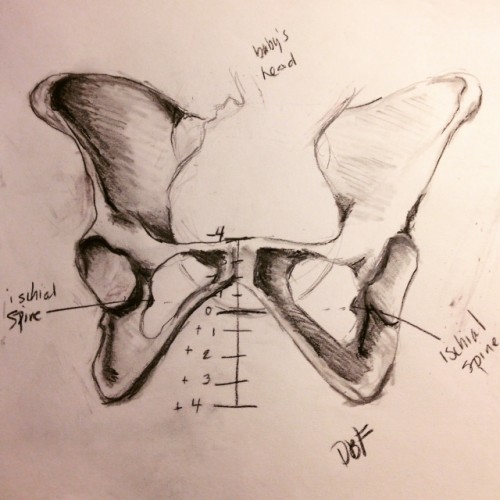
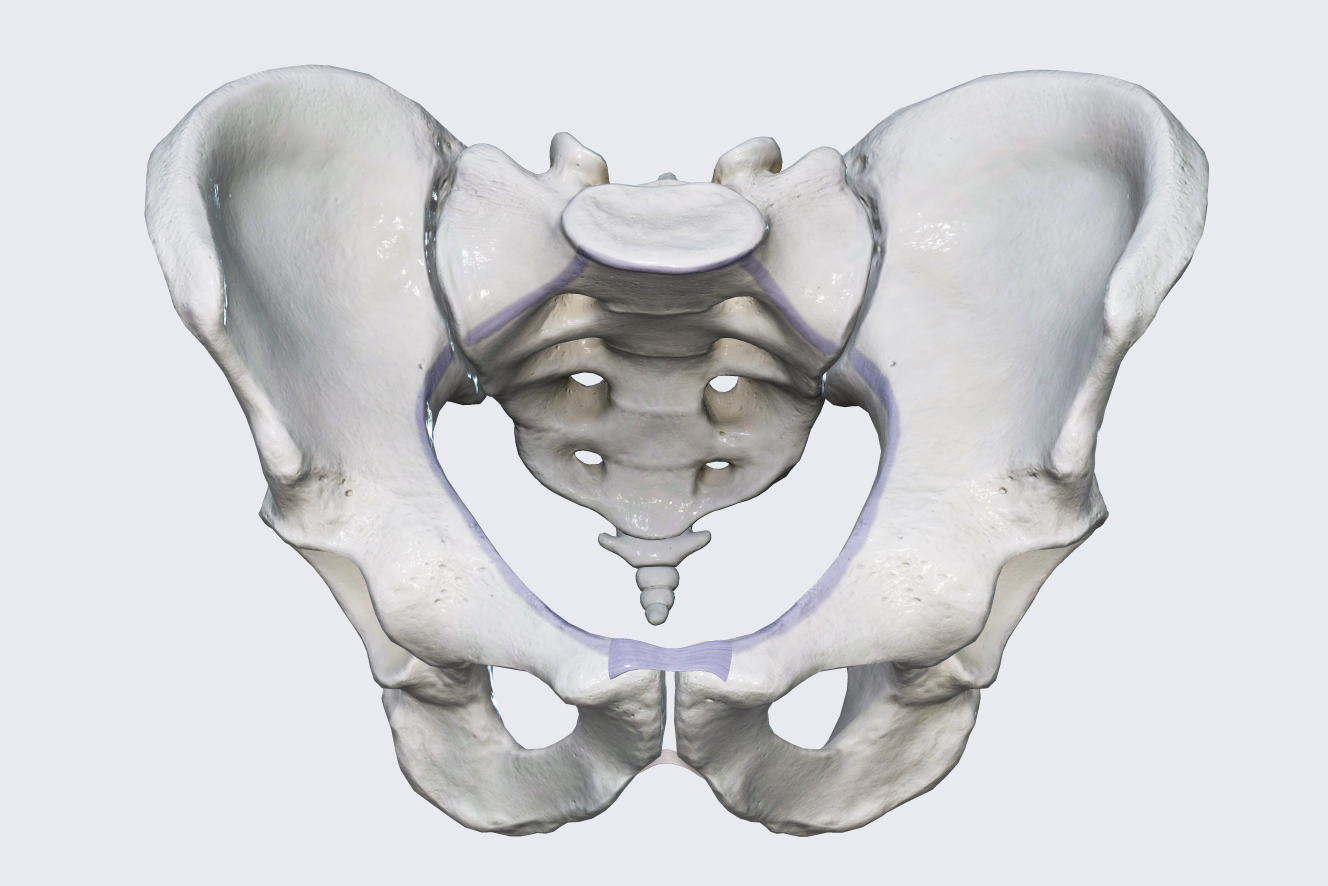
Art from many cultures throughout history shows that women have used both upright and gravity-neutral positions (such as side-lying or hands-and-knees) to give birth to their babies. Until doctors began using forceps in the 17th century, women were rarely shown giving birth in supine positions (lying on the back). The ideal position for a woman would allow for optimal opening of the pelvic outlet, use the advantage of gravity and offer a smooth path for the baby’s descent through the birth canal. When a mother births in the lithotomy (flat-on-back) or “C” position (resting on tailbone with body curled in the shape of a C), she reduces the space in the outlet of her pelvis, making it a tighter fit for the baby. The sacrum gets pushed into the birth canal, thus diminishing the space for baby to move through, and preventing the rectal space from stretching. This will, in effect, lengthen her second stage of labor (pushing). Also, the baby has to work against gravity as it heads upwards over the tailbone and under the pubic bone.

When a woman is on her hands and knees or standing, the Rhombus of Michaelis can be seen clearly because the pressure from the fetal head (which is, in fact, the chin and face as it de-flexes or extends) lifts the sacrum and coccyx out of the way. If a woman is in a well supported squat [this means with knees apart and the bottom not less than 45cm off the ground, as this allows the back to arch in the correct way] standing and leaning forwards or kneeling and leaning forwards with her arms clutching onto something higher than her waist, she will instinctively arch her back and ‘throw’ her pelvis out at this stage. Sheila Kitzinger describes in her book ‘The Experience of Childbirth’ how Jamaican peasant women believe that their backs have to ‘open up’ before their babies can be born. This is the same phenomenon. Dr. Michel Odent calls it the ‘fetal ejection reflex’.

It is not uncommon for a woman to hear that her pelvis is too small for the baby to fit through. This is called cephalo-pelvic disproportion (CPD). It does happen - but rarely. It may be that due to the baby’s size a woman needs to take a number of positions in order to push the baby out. Pioneer doula Penny Simkins explains in The Labor Progress Handbook, “Many suspected cases of CPD actually involve fetuses who are subtly malpositioned (asynclitic, deflexed, occiput transverse or posterior), who will fit well through the pelvis once the malposition has been resolved. The shape of the woman’s pelvis is also a consideration. The woman may need to try pushing in a variety of positions to find the ones that optimize descent. Resolving problems of position or fit often requires extra time. Many large fetal heads will mold and fit safely through the pelvis, but molding takes time.” It is important to allow a mother to experiment with different positions to see what is the most effective for her and her baby, especially if her baby is suspected to be large.

I highly recommend having a discussion with your doctor about how he or she feels comfortable “catching” the baby. Also, find out ahead of time if your hospital has squatting bars and birth stools. Each baby, mother and birth is different and requires individual consideration, so why are we all expected to birth in the same way?

July 1st, 2008at 12:21pm admin

What is a Doula?

Over the last few weeks I have received so many inquiries about doulas. What is a doula? What does a doula do? How much do they cost? How do you interview a doula? So, I thought I would try to answer these questions to the best of my ability.

The word ‘doula’ is derived from Greek and means ‘woman of service’. (In my opinion this sounds a little negative - I prefer ‘labor assistant’!) There are two different types of doulas: labor support and postpartum care. Postpartum doulas are also considered ‘mother’s helpers’. They help mother the mother after her birth, perhaps showing her some newborn procedures, helping establish a schedule for mom and baby, and doing basic chores like cleaning the house, food shopping, and laundry. (I chose to be a labor support doula. I figure I am not that good at cleaning my own house or doing laundry, and to be honest taking a trip to Fairway is a low point in my weekly routine - so my skills are best used to help mom during labor.)

Labor support doulas are usually hired by the couple, although some hospitals provide them free of charge to offer nonjudgmental emotional and physical support. They are also equipped to help answer many questions about the labor and birth process and medical interventions. While most doulas are not trained medical assistants and do not perform medical procedures, they have quite a bit of knowledge that may assist the couple when making decisions about the path of their labor and birth. Personally, I never make a decision for the couple, but rather provide answers to their questions and both pros and cons of any options that are presented. This way, when the couple has to make a decision, they are doing it from a place of knowledge, not fear.

Another reason a doula may be a good person to bring along is that several studies have shown that the presence of a doula can reduce the rate of routine interventions and cesareans. Her assistance tends to result in shorter labors with fewer complications, reduces negative feelings about one’s childbirth experience, reduces the need for pitocin (a labor-inducing drug), forceps or vacuum extraction,and reduces the mother’s request for pain medication and/or epidurals.

There are currently two principle groups that certify doulas: ALACE (Assocation of Labor Assistants and Childbirth Educators) and DONA (Doula Organization of North America). I was certified through DONA. Both groups firmly believe in the importance of consistent, continuous support throughout labor and in respecting the couple no matter how they choose to birth.

I am often asked by concerned mothers who want to have an epidural if that is likely to be ok with a doula. The answer may vary from person to person, but most doulas believe that they are there to assist in the best birth experience a mother can have through her own vision and wishes. I firmly believe that each woman needs to birth how she feels is best for her and her family. The experience of birth has a lasting and profound effect on a woman, and the doula is there to help ensure that it is empowering and satisfying.

Once you have found a doula who you think you would like to work with, what is the next step? I would suggest a ‘meet and greet’. This is an opportunity for the mother and her partner to sit and chat with the doula and inquire about her style, beliefs, price, availability, back-up support, etc.

Here are a few questions that may be useful:

1. What is your philosophy on childbirth? Do you only attend and support women that are intending to do a natural birth? Are you open to the use of pain medication?

2. What are some of the non-pharmaceuticals pain methods that you use?

3. How do we determine when you join us? Do you come to our house at the beginning of labor? Or do you meet us at the hospital or birthing center?

4. Have you worked with my doctor, practice, midwife or at the birthing center or hospital where I will be giving birth?

5. How many births have you attended?

6. What kind of training do you have?

7. Do you have a back-up doula in case you are not available when we need you?

8. What is your cost?

9. Do you have references we can check?

10. How many times before the labor do we meet? Do you help us with our birth plan?

One of the most common questions I encounter is the cost of doulas. There is a range based on several factors - where you live, for instance. A doula in NYC will probably cost more than outside the metro area. Experience is another determining factor. At this time the average range for a doula with a fair amount of experience, which I would say is at least 25 births under her belt, is $1500-$2500. I have heard of very seasoned doulas who have attended hundreds of births charging upwards of $4000. If these numbers sound outrageous, you could also consider finding a doula who is in training and would probably only ask you to cover her expenses - taxi fare and food. Some doulas even work on a sliding scale. But keep in mind when digesting this figure that the doula is making a commitment to you to be on call and available for three weeks prior to your due date up until you have your baby. It is possible that your doula will be on call for you for a whole month!

I hope this helps explain the role of the doula and the benefits of having one as a member of your support team, and that you now have some insight as to how to find the doula who is right for you.

June 27th, 2008at 11:54am Deb

Home Birth: Is This the Next ‘Right to Choose’?!

On June 18th the American Medical Association (AMA) issued a resolution in support of the ACOG statement that “the safest setting for labor, delivery, and the immediate post-partum period is in the hospital, or a birthing center within a hospital complex, that meets standards jointly outlined by the American Academy of Pediatrics (AAP) and ACOG, or in a freestanding birthing center that meets the standards of the Accreditation Association for Ambulatory Health Care, The Joint Commission, or the American Association of Birth Centers.” as well as a resolution “to develop model legislation in support of the concept…“.

The statement from ACOG and the subsequent resolutions from the AMA are very likely due at least in part to the increased attention from the media on home birth, brought to the forefront by the film “The Business of Being Born” and its producer Ricki Lake. I have seen the film multiple times and think it is a very responsible, well-done documentary on the subject of home birth. The overall message is that home birth is a safe option for a low-risk woman who has a trained, certified midwife in attendance for medical assistance.

The midwifery model of care is based on the concept that pregnancy and birth are normal life processes - not pathological medical conditions. However midwives are trained medical experts. They monitor the mother and the baby throughout labor with a dopplerscope, come equipped with oxygen and resuscitation skills, and bring Pitocin in the event that it is necessary. They are also at the ready to make a call to transport the woman to a medical facility should she need more advanced medical attention. But unlike many medical professionals within hospital walls, they allow the birthing mother a great deal more choice - for instance the position she wishes to take to birth her baby - with fewer restrictions.

There have been numerous studies demonstrating that a home birth with a trained midwife can be a good choice for low-risk women who want to avoid unnecessary routine interventions. The largest and most rigorous study of home birth internationally to date found that among 5,000 healthy, “low-risk” women, babies were born just as safely at home under a midwife’s care as in the hospital. And not only that, the study, like many before it, found that the women actually fared better at home, with far fewer interventions like labor induction, cesarean section, and episiotomy (taking scissors to the vagina, a practice that according to the research should be obsolete but is still performed on one-third of women who give birth vaginally).

Other eye-opening statistics indicate that though the US has the most expensive births, the maternal and infant mortality rates are on the rise. According to Mother Magazine, US infant mortality rates continue to rank it below 30 other countries. Twenty-two percent of all pregnancies are induced, and most worrisome of all, in the last four years the maternal mortality rate has risen above 10 per 100,000 for the first time since 1977. These statistics can not be blamed on home birth since only 1% of US women are birthing in their homes.

If you look outside the US, many other countries are strong proponents of allowing women the choice to birth at home. The Netherlands with over a third of all births being planned homebirths. The Perinatal Study Group came to this conclusion about the Dutch system of maternity care: “This is an important exception: this country also has one of the lowest mortality rates in the world for both mother and baby. This maternity system is worthy of close evaluation and emulation.” Across the pond, the British OB/GYNS respond with “There is no reason why home birth should not be offered to women at low risk of complications… it may confer considerable benefits for them and their families. There is ample evidence showing that laboring at home increases a woman’s likelihood of a birth that is both satisfying and safe…”

Home birth is not a choice for everyone. Several states in the US have made a home birth attended by a direct-entry midwife illegal. These states include Alabama, North Carolina, Georgia, Hawaii, Illinois, Indiana, Iowa, Kentucky, Maryland, Missouri, South Dakota and Wyoming. One of the concerns of home birth advocates is that the AMA is trying to persuade individual state legislators to see home birth as harmful to the baby, equating it as child abuse, for which the woman may be criminally prosecuted.

How a woman chooses to birth should be based on her needs and what feels right for her and her family. She should be educated about her options and empowered by her choices. Wherever a woman is most comfortable, supported and heard is the best place for her to birth her baby, whether that be at home, a birthing center or a hospital. Throughout history women have fought long and hard for the right to make decisions about their own bodies. Birthing is a natural ability with which women come naturally equipped. Shouldn’t we be able to choose how and where?

June 20th, 2008at 10:53am Deb

Celebrity Births. The Good. The Bad. The Influence.

I have never been one to closely follow celebrity gossip. In fact, I am embarrassingly behind the times - stuck somewhere in the late 90’s when Julia Roberts, Meg Ryan and Friends were big. But I can’t deny the influence celebrities have on society. They are the American equivalent of the British Royal Family. Recently, the biggest Hollywood trend is pregnancy and babies. (I have even been called up by VH1 looking for the scoop on “hot Hollywood mamas” only to disappoint the producer when I told him the mega stars have not passed our threshold.)

With this uprise in celebrity births there is a bit more scrutiny on how the precious little off-spring of the Hollywood elite come into the world. And, it stands to reason that like everything else, how Tinseltown gives birth will have an impact on Jane Q. Public. There seem to be two emerging camps of thought: A return to the home for birth or an early trip to the ER for a planned cesarean birth.

On one hand we have people like Ricki Lake, who has used her celebrity status to open the eyes of many to the possibility and safety of a home birth with her film The Business of Being Born. I recently spoke with one midwife who said she has never been this busy. That movie really boosted business! After a little digging, I was thrilled to find out that many well-known celebs have recently opted for a home birth with a midwife. Demi Moore, Cindy Crawford, and Davina McCall have all given birth at home three times. Nelly Furtado, Lucy Lawless, Ani DiFranco, and Pamela Anderson are also amongst those who chose a home birth. Pamela Anderson is quoted as saying “I gave birth at home both times, naturally, with a midwife, in water, with nothing.’

Then there is the other side - the planned cesarean births - that seem to get a bit more media attention. I guess what I find most horrifying is the reasoning behind this choice, and I am ghastly afraid that the American public will follow suit. Many of the Hollywood mamas are “too posh to push”. Christina Aguilera has been quoted in Hello Magazine as saying “I didn’t want any surprises. Honestly, I didn’t want any [vaginal] tearing. I had heard horror stories of women going in and having to have an emergency C-section [anyway]. The hardest part was deciding on his birthday. I wanted to leave it up to fate, but at the same time I was ready to be done early!” I strongly encourage readers to research the full spectrum of evidence on the risks of non-emergency C-sections.

A related scary trend is the idea of “near term” births. These are babies that are delivered 4 or 5 weeks before the given due date. (Note that full term is considered between 37-42 weeks.) It’s rumored that some celebrity moms have asked to deliver their babies via C-section a month before their due dates to get a head-start on slimming down, says Wang, co-director of the newborn nursery at Massachusetts General Hospital.

There is significant risk to a child delivered before full gestation. A study published last year in the medical journal Pediatrics,compared 90 near-term infants with 95 full-term infants. Near-term babies were more likely to be evaluated for infections and to have low blood sugar, unstable temperatures, breathing problems and jaundice. As a result, 27% of the near-term babies required treatment with intravenous fluids, while only 5% of the full-term babies did. And 50 of the near-term infants didn’t get to leave the hospital with their mothers, compared with only 7 of the full-term babies. Infant mortality in our country is at a surprisingly high rate for a developed country. Does this “near term” birthing trend shed some light on why U.S infants die too often? Marian MacDorman, a statistician at the U.S. National Center for Health Statistics (NCHS), was recently quoted as saying The single most important thing we can do to lower the rate of infant mortality is to reduce the rate of preterm birth. But in fact the trend is going in the opposite direction — that rate [in the U.S.] is increasing.

We live in a society where our heroes are actors and rock stars - fame is valued, many would argue, more highly than education. I’m not prepared to debunk the importance of the cool factor in our role models. But I do think it’s important to bear in mind that when it comes to life and death decisions, jumping on any bandwagon being driven by pop culture is ill-advised. Who will empower you? What will inspire you? And what is informing your decisions?

Watch the red carpet for the latest in evening gown fashion and read the tabloids to see who looks best in a bikini. But when it comes to how you bring life into the world, look not to the A-list, but to your very own inner goddess.

*Check out the article from iyogalife.com about Angela Kinsey from The Office, as she talks about how prenatal yoga practice prepared her for birth!

1 comment May 27th, 2008at 06:05am Deb

My Labor Has Started. Now What?

Very few occasions in life have the expectations and anticipation that compare to those of pregnancy - the whole pregnancy is called ‘expecting’! So of course, the onset of labor is going to be a big deal - but maybe it shouldn’t. I am not saying that you shouldn’t be excited about finally meeting your baby and starting this new phase in your life, but at times over -excitement can lead to downright exhaustion.

When I teach a childbirth education class or am working with a couple as their doula, I advise them that when they suspect labor is starting they should notify the important people that are involved: Their doula, doctor, babysitter, etc. - just to give them the heads-up. And then ignore the situation. Put the watch away- don’t time the contractions. Early labor can take many hours or even days. I guarantee you will know when things have shifted to where they need more attention. If it is nighttime, try to sleep. If it is daytime, alternate between rest and doing a ‘birth project’. (A birth project is anything that is distracting that you like to do. Some women I know have started baking projects or crossword puzzles or just gone for a walk.) A good indication that labor is shifting is that the mother can no longer focus on her birth project, and the cookies she started earlier are burning in the oven!

The reason I give this is advice is that if she doesn’t rest, a woman will focus solely on the early contractions and will start to pull out all the tricks she has to deal with labor - and not have any energy for later in labor. I was having an in-depth conversation with a friend who is currently pregnant with her second child about the length and exhaustion of her first labor. (Granted, her baby was posterior which explains the lengthiness of the experience.) But one thing she recognizes is that she jumped the gun a bit on ‘dealing with her labor’, and by the time it got really difficult she had already exhausted herself.

For a woman giving birth for the first time, it’s hard to know how to pace herself for an experience she has not yet had. Over the years as a doula, I’ve had the benefit of seeing many births - and now I’m better at knowing when it’s really time for mom to gear up for labor. But I remember several years back, when I was just starting out as a doula, when I too was drawn into the excitement of early labor. I was called into my client’s birth, and she explained that her contractions were rather intense and she felt she was ready for me. I thought it was pretty early on for her to be so far along in her labor, but being a novice I didn’t really question the situation, and I didn’t know the emotional signposts to look for to indicate where in labor she was really at. When I arrived, she was bouncing on her birth ball with a big smile across her face and doing her “breathing”. Needless to say, we were miles away from the more active part of labor. But we breathed, we walked and we rocked - and ultimately by the time she really needed her energy reserves, she was pretty tired. (Just to give you the ending to this client’s birth story, she went on to have a beautiful baby girl and all was well.) Had we ignored her labor for a bit longer, she might have had a bit more energy, hydration and stamina for her marathon labor.

So I guess what I am trying to say is do less. Let your body and baby give you the signals - you’ll know when you need to put a little more energy into your labor. Until then, continue to nourish, hydrate and rest until you just can’t ignore your new arrival.

1 comment May 20th, 2008at 10:53am Deb

Get a Move On!

I was talking to one of the students yesterday about freedom of movement during labor. She was concerned that as soon as she arrived at the hospital she would be hooked up to the EFM and would not have the freedom to move about as she would like. She asked what I thought about that.

Well, if you are on full-time EFM, it is true that your movement options will be limited. This is because in certain positions, like on all-fours or sitting/leaning on the birth ball, the fetal heart rate isn’t as easily picked up by the monitor. As an alternative to full-time EFM, you can ask your doctor to do intermittent monitoring, which will allow you to walk the halls, take a shower or bath or what ever else you want to do, monitoring at times between these activities.

So why is it so important to be able to move around? First of all, it will be A LOT more comfortable to work through the contractions if you are not lying down and can move organically. Many of the laboring mothers whom I have assisted did NOT prefer a supine position. Most of them agreed that the contractions were a lot more intense and difficult to get through lying down. Secondly: “When you walk or move around in labor, your uterus, a muscle, works more efficiently. Changing position frequently moves the bones of the pelvis to help the baby find the best fit through your birth canal, while upright positions use gravity to help bring the baby down.”

A few years ago, I attended Monica’s first birth. Her baby was slightly posterior and her labor was not progressing very well. So, knowing that we needed to shift her baby in her pelvis, we turned on the salsa music and got her booty shaking! It was actually a lot of fun - her mom even joined us in dancing around the room! (The hospital staff didn’t quite know what to make of this spontaneous dance party.) And, the dancing and movement was quite effective. After many songs and different moves, her baby did shift into a better position and she was able to have a vaginal birth.

When I was at The Farm Midwifery Center this past fall, I remember Joanna, one of the legendary midwives, saying that moving during labor reduces the length of labor by 25%. What woman would not want those results? Ina May Gaskin, one of the founding members of The Farm, encourages women to “find their inner monkey” while birthing. A primate would not labor on her back in stillness. She would move. She would rock. She would sway. She would create mobility to allow her baby to descend and rotate deeper into her pelvis and work its way out of her body. So why not follow her example? Birth is birth!

There is so much evidence in support of open movement during labor. I encourage all pregnant women and those thinking about becoming pregnant to investigate this option with their care providers. If mom is ok and baby is ok, why not move and groove as your body and baby wants to?

2 comments May 13th, 2008at 10:45am Deb

50 Ways to Scare a Mother

I came across this video on YouTube. I encourage all expectant moms to take 3 minutes and 3 seconds out of their day to watch it.

What I think is really scary about this video is how much truth is revealed about the practices of birth in our society. The video demonstrates the many ways a mother is pressured and frightened into accepting a variety of different interventions that may or may not be necessary, but have become commonplace in today’s births. The message seems to be clear: If the mother doesn’t accept these interventions, she is doing something wrong and it will hurt her baby. I have heard, on occasion, nurses and doctors saying, “We need to have full-time external fetal monitoring to make sure your baby is ok.” When in fact, there is evidence supporting the contrary, that full time EFM can lead to unnecessary cesarean birth. Or statements like “If you don’t take your epidural now, you may not be able to get it later.” Or “You can’t push your baby out, there is not enough room, your baby is too big”. All of these statements - that were probably not made with malicious intent - diminish a woman’s confidence that she is capable of birthing her own child without a cascade of interventions.

More importantly, how can we as a society, especially mothers, step away from the fear that our bodies are broken and not allow this mindset to be passed on to our daughters? In the past 10 years the U.S. national cesarean rate has increased 37%.. Twenty five years ago, cesarean births made up 17.8% of births. Today, we will find that about one mother in three is now giving birth by c-section, a record level for the United States. What will the situation be like in 25 years for the mothers who are being born now?

Hopefully at some point this trend will change, and birth will become an opportunity for a woman to feel supported and empowered by her choices - not scared.

Add comment April 28th, 2008at 01:43pm Deb

Explanation of Fetal Positions; What Poses Are Beneficial and What Poses Should Be Avoided During Pregnancy

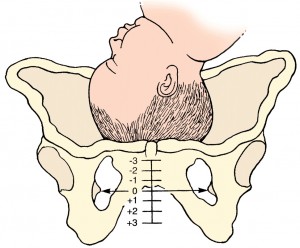
The cervix is opened by the baby’s head pushing against it with each contraction. You can visualize this action by picturing the cervix as a turtle neck sweater through which the head is slowly emerging. Ideally, to push the cervix open most effectively, the baby’s chin is flexed, and the smallest part of the baby’s head (the occiput) presents first. However, sometimes the baby’s occiput is facing backwards or is posterior, so it does not emerge first.

Posterior Position

• Occiput Posterior (OP)
• Right Occiput Posterior (ROP)
• Left Occiput Posterior (LOP)

The baby presenting in a posterior position can lead to a host of issues. For one, dilation and progression usually take longer, and some women get “stuck” at a certain point in dilation. The mother may experience intense back pain, since the baby’s skull is pressed up against her sacrum. She may also experience the urge to urinate during each contraction, because the baby’s forehead is pushed up against her bladder.

At times it is it difficult to rotate a baby out of the posterior position, especially if the baby has entangled itself in the cord. There are yoga poses that are encouraged and discouraged during the last trimester to help the baby move into the ideal birthing position.

Specific yoga poses to omit from the 3rd trimester practice are:

• Legs up the wall
• Supta Baddha Konasana (at the end of class)
• Supported bridge for a long period of time

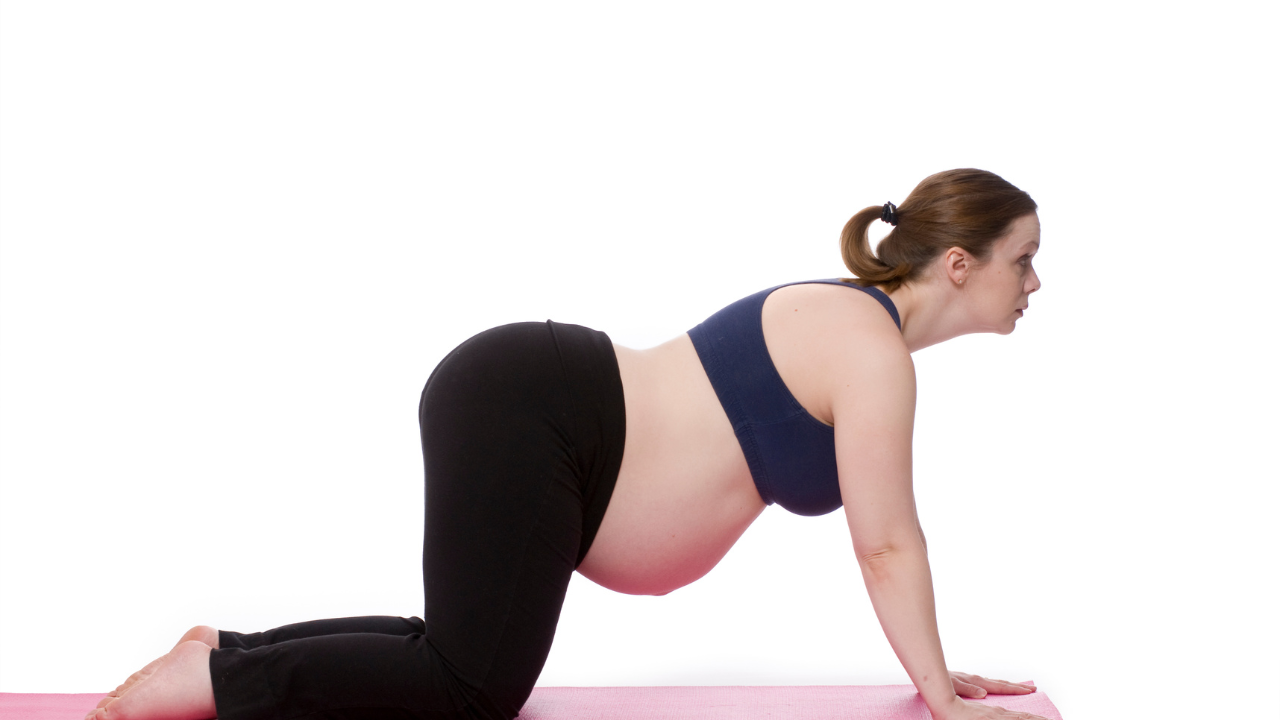
It is advisable to do any “belly down” pose like child’s pose, cat/cow, body circles and a brief downward facing dog. (Please exclude downward dog if the baby was once in a breech position and has finally turned head down.) I also encourage women to sit on a birth (exercise) ball or sit upright or leaning forward in chairs. If the mother has access to a pool, swimming is a fantastic activity for the last trimester since the mother is belly down for a prolonged period of time, and immersing the body in water can help reduce swelling.

During the last trimester I encourage the mothers to spend as little time on their backs as they can. This includes asking them to check in with the way they recline at home as well as in the yoga studio. It is so easy (and desirable!) to come home and drop back into the couch or comfy chair. They should avoid doing so, however, since it creates a hammock-like shape for the back and invites the baby to settle into a spine-to-back position.

Another reason that the baby may present posteriorly is that the mother’s uterine ligaments and pelvic floor muscles are tight and somewhat twisted, preventing her baby from settling into a good position. Luckily, many poses we do in prenatal yoga encourage the pelvic and uterine ligaments to gently open and relax. Exercises that relax and tone the pelvic floor muscles are also included in class.

Specific asanas for preparing the pelvis for labor and delivery:

• Baddha Konasana (cobbler’s pose)
• Supported or unsupported squats
• Upavistha Konasana (wide angle pose)
• Janusirasana (head to knee pose)
• Pigeon pose
• Virasana (hero’s pose)

If the baby is malpositioned and the mother is aware of what side the baby is laying on, she can help correct this by arranging her body to encourage the baby to shift during savasana or while asleep. If the baby is OP, the mother should use “pure side lying” as opposed to semi-prone. The mother should lie on the side towards which the occiput is already facing, with the baby’s back toward the bed.
If the mother would prefer to rest in a semi-prone position, she needs to lie on the side in which the baby’s occiput and back are facing towards the ceiling. For example, if the baby is ROP, the mother would be on her left side in a semi-prone position and on her right side for “pure side lying”.

Breech Position

• Breech
o Footling breech
o Frank breech
o Complete breech
o Kneeling breech

Another issue some mothers face is the baby being in a breech position. This could mean the baby is standing straight up in the womb (footling breech), presenting butt first (frank breech), sitting cross- legged in the womb (complete breech) or the baby is kneeling inside (kneeling breech). Either way, very few doctors will deliver a breech baby vaginally. If a mother finds out her baby is breech, she is often anxious to help turn the baby around. Luckily, there are some yoga poses that can assist with this.

Poses to help turn a breech baby:

• Prolonged inversion like downward dog
• “Butt up” child’s pose
• Supported bridge pose
• Right angle handstand at the wall ***advanced practitioners only
• AVOID squatting, as it opens the outlet of the pelvis and invites the baby to wedge itself deeper down.

Beyond these specific yoga poses, acupuncture has been known to help. Also, you can try placing ice at the fundus since the baby will likely move away from the cold. Or, place music or light down at the pelvic opening since babies will go toward sound and light.

In general, mothers should be mindful of the baby’s position as she nears her due date and tailor her practice accordingly. Yoga can have a powerful effect on these last few weeks and days of pregnancy!

2 comments April 21st, 2008at 01:21pm Deb

Eating During Labor

Labor is probably not the time you will be requesting a huge steak dinner, but it is a good idea to continue to nourish your body. Not eating during labor may reduce your energy, increase your fatigue and decrease your ability to deal with stress during labor. Can you imagine laboring for 15 hours and then pushing your baby out having only ingested ice chips the whole time?

Hospitals began restricting food and fluids about 50 years ago, when women often gave birth under general anesthesia without their airway protected. The doctors were concerned that the women would vomit and aspirate while under the anesthesia. Even though it is extremely rare that general anesthesia would be used in a labor and delivery situation, this old protocol is still enforced in many hospitals.

A recent review of the research on this topic found that there is no evidence that restricting food and fluids in normal labor is beneficial. Recent research shows that eating and drinking are safe in normal labor. Based on the best evidence available, food and fluid should not be routinely restricted in labor.

“Women permitted to eat low-fat, low-residual foods during labor were no more likely than women who received only water to have labor, delivery, or neonatal complications in a randomized study conducted in the United Kingdom.

Moreover, women who ate rated their overall labor experience as significantly better than that of women who were only allowed to drink water, according to a study presented in poster form at the annual meeting of the Society for Gynecologic Investigation“.

A while back, I was reading Midwifery Today and found a short article about “The Midwife’s Pitocin”. This one midwife recommends that her clients make a bowl of oatmeal, honey and nuts during labor and graze on it when they desire. If you break down the ingredients, you will find the perfect balance of complex carbohydrates, protein and natural sugar. Imagine that you are about to run a marathon - you would surely fuel your body with healthy supportive food! I have been recommending this concoction to my doula clients. It seems to have given them some lasting stamina.

The oatmeal will probably not be welcome at the hospital, but you can try to get some in your body before you head in. If you are birthing at a birthing center or at home, you can continue to eat when you like. So what can you do if you are birthing at a hospital? First check in with your hospital and care provider and see what their guidelines are. Recently some hospitals have begun to allow clear fluids, broths and juices for low risk women. If you are restricted to ice chips, bring along a sports drink that has electrolytes and some sugar and mix that in with your ice chips. But be sure to try to avoid the overly sugary drinks as they may cause nausea.

Some women are concerned that eating during labor will cause them to vomit. But according to the same study referenced earlier, “Vomiting was not more common among women allowed to eat light foods, 18% of whom vomited once and 17% of whom vomited more than once, compared with 17% and 17% of women in the water-only cohort.” In fact, vomiting is a sign of transition and can actually help push the baby deeper down into the birth canal.

Here is a list of “light eating” that may be appealing to the laboring mom. Please note you are more likely to have a desire for food in early labor. Don’t force yourself to eat anything you don’t want to.

Oatmeal

Whole wheat toast

Crackers

Soups

Fruit

Granola

Bagel

Applesauce

Mashed potatoes

Eggs

1 comment April 15th, 2008at 10:57am Deb

Elective Surgery: Nose Job. Breast Augmentation. Cesarean????

True story: I had the misfortune of bad timing the other day in the bathroom at the UWS Loews Theater, overhearing a brief conversation between two very pregnant women. The conversation went something like this:

“When are you due?”
“March 20th, but I’m having my c-section on the 18th.”
“I’m having a c-section on the 23rd. Why are you having a c-section?”
“Well, at 37 weeks, the baby was already 7 pounds 13 ounces and my doctor said ‘I wouldn’t put you through labor with a baby that big’.”

I left after that. Shocked by what I heard, I headed back to the theater and proclaimed to my husband, “I know what my next blog entry will be about.”

Sometimes I get the sense that my students feel I am anti-medical establishment. Actually, I am not. I am very thankful that modern medicine and technology exist for true emergencies and for the prevention of disease and illness. (Pregnancy and labor do not often, thankfully, fall into the latter category.) I am, however, not a fan of doctors offering to give elective cesareans for cases of presumed large babies and other erroneous reasons.

I have three major problems with this.

How big is baby really? Many doctors rely on the ultrasound data to determine the weight of the baby. Yet, in a study at the Department of Gynaecology, Obstetrics and Neonatology, University of Medical Science of Bari, Bari, Italy, it was determined “Twenty-nine formulas provided an overall mean absolute percentage error less than or equal to 10%, with overall predictions within ±10% and ±15% of the actual birth weight (69.2% and 86.5%, respectively). So how could the doctor be so sure that the mother was carrying a 7 pound 13 ounce child?

Big babies do not automatically require a cesarean. Even if a child’s weight is on the higher side, who says that the mother’s body is not capable of birthing her own child? (I personally witnessed a petite mother push out a 10 pound 3 ounce baby, totally naturally!)

I also think that the risks of cesarean births tend to be overlooked. Yes, they are safer than in years past, but there are still many complications and risks to consider when deciding to birth in this manner. The Maternity Center Association released data from a study concluding “Review of more than 300 research studies shows cesarean section increases chances of infection, pain, re-hospitalization, and breastfeeding problems in the mother, and increases the likelihood of serious problems for mothers and babies in future pregnancies, including infertility, placenta problems and fetal death.”

In a very interesting study reported by Science Daily, published by the British Medical Journal, researchers found “Women having a non-emergency caesarean birth have double the risk of illness or even death compared to a vaginal birth”. The article makes a clear distinction between cesareans performed as a result of medical necessity and those which are elected based on other criteria. The neonatal death statistics were also alarming: “The authors also found that the risk of neonatal death was also significantly increased (more than 70% higher) up to hospital discharge for babies who were born head first from both an elective and a clinician chosen caesarean delivery, compared to a vaginal delivery.

So why are doctors performing so many cesareans? There are many factors I’m sure, but the threat of litigation is one of them. Joel M. Evans, MD, OB/GYN, assistant clinical professor at Albert Einstein College of Medicine in Bronx, N.Y., says, “Unfortunately, we’re in an environment in which more cesarean sections are performed than are necessary. One of the reasons for this is the practice of defensive medicine. Doctors are making decisions to perform cesarean sections sooner than they did in the past to avoid lawsuits. What I mean by this is that some cesareans are clear medical necessities, but others lie in a gray area, where there are other possible medically appropriate options. Now, more and more physicians find it easier to follow the growing trend of just go ahead and do it, avoid a lawsuit.”

Also along these same lines, another unfortunate effect of undergoing a cesarean birth is that it forever categorizes the woman as ‘had cesarean’. Should she choose to have another child, she will have to seek out a doctor who specifically supports VBACs (Vaginal Births After Cesarean). Many doctors will not, for fear of a law suit in the event of something going wrong.

Let me be clear: How one births is a personal choice. Furthermore, I am not anti-cesarean, and I am certainly not anti-medicine. I just want to bring to the attention of those women having elective cesareans the fact that there are a number of considerations to be made. The choice is yours, but so is the responsibility to carefully weigh both the risks and the benefits of your decision.

5 comments March 17th, 2008at 02:49pm Deb

Debunking the Difficult Doula

I have just finished reading ‘And the Doula Makes Four’, an article on doulas and lactation consultants in last week’s New York Times. The article certainly does not paint a pretty picture of either vocation.

In any field there is a range of professionals and an equally wide range of beliefs and practices to which they adhere. Yes, there are some doulas who will not work with women who intend to use drugs. And there are others (myself included) who just want the mother to have the best birth experience possible, however SHE wants. Just as some doctors do not believe in natural birth, some doulas do not believe in medicated birth. Hopefully, the mother-to-be will select a doula whose philosophy is aligned with her own just as she would choose a doctor who will aid her delivery with respect to her preferences.

The examples given in the article of combative relationships between doulas and hospital staff seemed to be based on those doulas acting outside of the appropriate realm of a certified labor support doula. In my experience as a doula, I feel I go out of my way to stay friendly with the hospital staff. I think that most of my colleagues do, as well. The doula is hired to provide emotional and physical support as well as to be an advocate for the parents – not to be a source of tension and stress. A doula can, often times, help to avoid unnecessary routine interventions, but it is clearly against the DONA (Doula Organization of North America) guidelines to offer medical advice or to perform clinical or medical tasks. My personal practice is to offer my clients the best of my knowledge and inform them of the pros and cons of the options which are presented to them, as well as additional options, but never to make a decision for them. In fact, if I suspect that not all of the information is being offered openly and clearly explained, I will encourage the parents to ask for more details. And of course, I refer back to my “three questions”: Is the mother ok? Is the baby ok? May we have more time?

It is unfortunate that some doulas are causing strife for the parents and the hospital staff, establishing a negative stereotype of the “pushy doula”, especially as there have been numerous studies and research proving that the presence of a labor support doula helps to lower cesarean sections and routine intervention as well as adds to the mother’s satisfaction of her birth experience.

To date I have attended about 60 births, and only once was a doctor outwardly hostile to me. With this one exception, I got the sense that they welcomed my presence, as long as I didn’t try to impose on their practice. The nursing staff often seems relieved when I arrive. They are usually overburdened by the number of patients to care for, and my being there helps free them of some of the non-medical work. Furthermore, I find that my observations of and relationships with doctors and nurses have nurtured my practice as a doula. I have actually learned many useful techniques and ideas from watching and listening and learning from their experience.

For those on the fence about hiring a doula, I hope that Ms. Paul’s article has not made you decide against one. Please consider the encouraging stories as well, and look at all of the supportive research demonstrating the potential positive effects of having a labor support doula present. And please, PLEASE, PLEASE: Interview your doula and your doctor to make sure that you are assembling the best, most supportive team to possible for YOUR birth experience.

Here are some more research sources supporting the presence of continuous labor support:

Continuous Support for Women During Childbirth, new Cochrane Review through the Childbirth Connection (Formerly Maternity Center Association), July 2003


Listening to Mothers: Report of the First National U.S. Survey of Women’s Childbearing Experiences,Childbirth Connection
(Formerly Maternity Center Association), October 24, 2002

Caregiver Support for Women During Childbirth: Does the Presence of a Labor-Support Person Affect Maternal-Child Outcomes?, American Family Physician, October 1, 2002

Lying in, Canadian Medical Association Journal, September 17, 2002

Care of Women in U.S. Hospitals, 2000, Agency for Healthcare Research and Quality
, October 2002

3 comments March 10th, 2008at 01:20pm Deb

Step Away From the DRAMA!

The other day I was channel surfing and landed on “A Baby Story”. I hear students speak often about this show as well as other baby/birthing shows, so I figured I should see what all the fuss is about. Also, I’m aware that the images shown in these programs significantly influence how people perceive birth.

To make a long story short, this particular episode depicted exactly what I would have expected to see on dramatic daytime television – and was saddened by the realization that so many others viewed it along with me. The mother had a long labor, in bed, hooked up to multiple machines – she looked very uncomfortable. The doctor encouraged her to take something for the pain. The next shot was the mother pushing, flat on her back. The doctor checked the mother and said, “It has been two hours and it feels like there is a lot of molding to your baby’s head, which means the skull bones are overlapping and will not fit through your pelvis. You will need a C-section.”

I was horrified, but not surprised by what I saw as the next series of events unfolded. As we all know, being flat on your back is the hardest way to push. And, the doctor just gave up on the mother. She didn’t say the baby wasn’t tolerating the contractions well, or that the mother’s blood pressure was a problem. She said it had been two hours and the baby’s head was molding. That is exactly what the baby’s head is supposed to do!

But before I go off on too much of a tangent on the many, many unfortunate factors contributing to this woman’s situation, I will get to my point: Turn it off. Women don’t realize that what they are watching and hearing is directly contributing to their fears and anxieties about childbirth and will directly affect their own birthing experience. This episode, whether consciously or not, planted the idea that something was wrong with this woman’s body and that she could not birth her baby. This message is seen and heard time and time again, in various forms, in the media and even in our own community.

There is an upside, though. Just as these negative stories have a negative impact on our future, positive stories have a positive impact on our future. “In a recent survey, women were asked to rate their fear of birth before reading positive birth stories, and again three weeks after reading birth stories. Participants reported an average of 33% less fear after they read empowering stories” (Midwifery Today pg. 31 Winter 2007).

I feel so fortunate that my mother (at every opportunity!) proudly told the stories of my brother’s birth and my birth. As it happens, both births were remarkably quick. She even jokes that I was almost born on the way to the hospital! I have grown up with a decidedly positive impression of birth, believing that my body is quite capable of birthing babies - hopefully as easily as my mother did! However, if all I had ever heard was how awful birth is and how traumatic it can be, I am sure I would be far more fearful and anxious.

I’m not suggesting that women should only share their birth stories if they had quick and easy births. On the contrary, even births which do not go ‘as planned’ can be told in inspiring, empowering language that focuses on what did work. I am suggesting that women turn off the TV dramas, tune out the YouTube birth videos, and even walk away from women telling their horror stories – all of which are clearly meant to draw an audience by dramatizing the fearsome. Instead, feed your mind with positive, uplifting, empowering stories about birthing. Start by picking up a copy of Ina May’s Guide to Childbirth, which includes about fifty such stories.

Or, go to the Birth Story page on the PYC website. I recently added this area to the website so that we can all read positive stories directly from our own community at the PYC. I love that Hanne shared in her story, “Both times it was such a bonding event for my husband.” Rebecca calls her birth experience a “charmed birth” and Shameka proudly proclaims, “I am breeder. And in the middle of childbirth, I wouldn’t have it any other way.”

When fear and anxiety start to overwhelm you, please take a moment to read these stories of women who have faced the same fears and uncovered their inner wisdom and womanly power. Carefully consider the potential consequences of seeing and hearing terrifying birth stories. Take these things in mindfully – you are feeding your future.

“What we think, we become.” -Buddha

I invite anyone who wants to share their story to add it to the PYC Birth Story page.

2 comments February 18th, 2008at 07:28am Deb

Playing the Field

Last weekend I did a private in-home childbirth education class with one of my students and her husband. It was really more of a refresher class, since she has already given birth to two beautiful children. I asked her a bit about her past birth experiences to get an idea of what we needed to go over. She proudly told the story of two relatively quick, medical intervention-free births. Then I asked her about her care provider. She moved to NYC recently and was seeing a doctor to whom she was referred by her previous care provider. I was surprised, given the nature of her previous births, to find out that her new doctor is rather conservative and heavily intervention-based. Armed with the knowledge of what she wanted for her birth and what her doctor might suggest, we spent a lot of time discussing how to avoid common routine interventions that may not be necessary in her case.

This meeting led me to thinking about the importance of choosing a care provider who best aligns with your philosophy of birth. There is not one right way to birth. I believe that the ‘best’ birth possible is one in which a woman is making informed, educated decisions – whatever those are. And not every care provider is a good match for every woman – care providers will tend to have their own opinions, based on their experience (and other factors) about what is best. Selecting a care provider for your upcoming birth is probably one of the most important choices you will ever make. It will set the tone for much of your pregnancy and birth. If you and your doctor are not on the same page about your options, you may be in for an uphill battle when it comes time to give birth.

Unfortunately, many women wait until too late in the game to educate themselves about their many options, especially with regard to medical interventions, and find out at the last minute that the hospital and care provider they have chosen will not honor their choices. Ironically, almost every mother I know spends a lot of time researching and interviewing pediatricians they will soon rely on for the care of their new baby. I urge expectant moms to have the same zeal when choosing the care provider who will be assist them in delivery. And don’t just rely on the recommendations from friends and family – Do your homework. Ask questions. Get answers. Find a care provider who gives you confidence about your pregnancy, listens to you and acknowledges your concerns, and respects and supports your choices. And don’t assume that you should stick with the care provider who you’ve been seeing for your ‘well-woman’ annual exams. Even if you feel you have a very good relationship with your current provider, you may find that his or her ideas about childbirth are not in line with your own.

On a personal note, I have been seeing an OB/GYN (Dr. Lee- he is really great!) for my yearly exams for ten years. To be honest, I chose him when I first moved to NYC because he was right off the A train and so it was convenient for me. Luckily, he turned out to be a great doctor. When I started talking to him about getting pregnant, I was very honest with him and told him that I would be switching to a home birth midwife. He was totally supportive and not defensive about it in the least. Actually, he said he expected that from me. The reason I bring this up is this: Even though I think Dr. Lee is fantastic – he gives me lots of time in my exams, answers all of my questions (even my doula questions) – he is much more routinely intervention-based than I would feel comfortable with when it comes to childbirth.

Childbirth is a challenge in and of itself. You don’t want to put yourself in the position of having the extra-added challenge of battling your care provider. He or she should be your teammate, not your adversary, and so you should align yourself with someone who, after gathering all of the pertinent information and thoughtfully considering it, will be there for you – not just with you – and certainly not against you.

Add comment February 8th, 2008at 02:28pm Deb


Categories